
Landlord representation means a commercial real estate broker works for the building owner, and only the owner, to fill vacant space on the best terms the market will support. The broker prices the space, markets it, screens prospects, negotiates the lease and carries the deal to signing. If you own an office, medical, retail or industrial building in the Charlotte area and you want vacancy handled by someone who does this daily, this is the service.
TL;DR
- A landlord rep is a licensed broker who represents the owner’s interests in leasing: rent, concessions, tenant quality and lease terms.
- The work runs from pricing and marketing the space through tour, proposal, negotiation and lease signing.
- It differs from tenant representation (the broker works for the occupier) and from property management (day-to-day operations).
- Owners benefit most when space has sat empty, when buildout and operating-cost terms are complicated, or when they own several properties.
- Choose a rep on local market knowledge, written agency terms, reporting and how clearly they explain lease economics.
Table of Contents
- What landlord representation actually is
- What a landlord rep does, step by step
- Landlord rep, tenant rep and property manager: who does what
- When landlord representation pays off
- Where lease details quietly cost owners money
- A worked example
- How to choose a landlord representative
- Working with Ardorcre
- FAQ
- Sources
What landlord representation actually is
A landlord representative is authorized by the owner to run the leasing process for a property. The agreement usually gives the broker the right to market the space and bring qualified tenants, and it sets out how the broker is paid and for how long.
The key word is fiduciary-style loyalty. When a broker represents the landlord, the broker’s job is to protect the landlord’s rent, the building’s value and the quality of the tenant roster. The tenant on the other side of the table is not the client.
In North Carolina, agency relationships in sales transactions must be explained using a Commission disclosure form. For leases, the state’s REALTORS association notes that the equivalent landlord and tenant disclosure form is optional but available so that a broker can explain the different agency relationships in writing. In practice, ask any broker who they represent before you discuss numbers, and get the answer on paper.
What a landlord rep does, step by step
The details change with the property type, but most engagements follow the same arc.
1. Price and position the space
The first job is deciding what the space should rent for and how it should be described. A broker compares recent leases, current asking rents, vacancy in the submarket and the condition of the suite. A second-generation medical suite with plumbing already in place competes differently from a shell office floor.
This is where local knowledge earns its fee. Charlotte submarkets behave differently: uptown, South End, SouthPark, University, Ballantyne and the industrial corridors each have their own tenant pools and concession norms.
2. Market the property
Marketing is more than a sign and a listing. A rep prepares a flyer or offering package, photographs, floor plans and a site plan, then pushes the space to tenant brokers and to direct prospects. Listing platforms matter, and we compare them in our guide to Crexi and LoopNet.
Outreach to tenant brokers is often the quickest source of qualified tours, because many occupiers hire their own broker.
3. Qualify prospects
Not every inquiry is a good tenant. A rep asks about business model, timeline, space needs, financial strength and use. For a medical building, use and parking ratios matter. For retail, signage and co-tenancy may drive the decision. For industrial, clear height, dock doors, power and truck access come first.
4. Tour, proposal and letter of intent
Once a prospect is serious, the broker coordinates tours and invites a written proposal. The letter of intent captures the economic terms before lawyers get involved: base rent, escalations, term, free rent, tenant improvement allowance, renewal options and who pays operating expenses. Our walkthrough of letter of intent negotiation on a first retail lease shows how much those early terms lock in.
5. Negotiate the economics
This is where the landlord rep is paid to think. A higher face rent can be worth less than a slightly lower rent with fewer concessions. A good broker models each proposal on a net effective basis, which spreads free rent and improvement dollars across the lease term.
Other points of negotiation include:
- Operating-expense structure. Triple net, modified gross and full service allocate costs differently. See our overview of the triple net lease and, for warehouses, industrial lease types.
- Tenant improvements and work letters. Who builds, who pays, and who owns delivery delays. Our landlord work letter checklist covers office and medical buildouts.
- Guarantees and security. Personal or corporate guaranties and deposits protect the owner if a tenant fails. The tenant’s side of this is explained in corporate guarantee lease terms.
- Signage, exclusives and use clauses. These affect the rest of the building. See signage rights in a commercial lease.
6. Lease drafting and close
The broker usually coordinates with the owner’s attorney, who drafts or reviews the lease. The rep keeps both sides to the agreed business terms, tracks deadlines and moves the deal to signature. Because lease language is legal language, owners should have a North Carolina real estate attorney review the final document.
7. Handoff
After signing, the tenant moves into buildout and then occupancy. Details such as commencement dates, rent start and estoppel certificates feed into the owner’s records and lender requirements. Our page on the estoppel certificate explains what gets verified.
Landlord rep, tenant rep and property manager: who does what
Owners often confuse three roles that sit near each other.
| Role | Who they work for | Main job | Typical moment |
|---|---|---|---|
| Landlord representative | The building owner | Lease up vacant or expiring space on the owner’s terms | Vacancy, renewal, repositioning |
| Tenant representative | The occupier | Find space and negotiate the lease for the tenant | A business needs a new or renewed location |
| Property manager | The owner | Run the building: rent collection, maintenance, vendors, budgets | Ongoing operations |
The three can coexist on one property. A landlord rep may be negotiating with a tenant who has hired a tenant rep, while a property manager handles the building. If you want a broader view of how owner-side roles divide, this explanation of asset management versus property management lays out the layers, though our work is commercial rather than multifamily.
On the operations side, our list of property manager duties to demand and our property management budget guide show what good management looks like.
When landlord representation pays off
You can lease a building yourself. Representation tends to matter most in these situations.
- Space has been vacant for months. A fresh pricing analysis and a wider broker outreach often change the picture.
- You own a specialized building. Medical office, with its plumbing, build-out and use restrictions, rewards a broker who knows what practitioners need.
- You are not local, or not full time. Out-of-town owners and owners with other businesses rarely have time to field inquiries and tours.
- A large renewal is coming. Retaining an anchor tenant on good terms can protect the whole building’s value.
- You plan to sell or refinance. Lenders and buyers study the rent roll and lease quality. Leasing with an eye to exit helps. Our guide to DSCR for commercial real estate shows how income feeds loan sizing, and the transaction costs guide shows what buyers and sellers should expect.
We go deeper on the owner’s side of this question in our landlord representation benefits page.
Where lease details quietly cost owners money
Most leasing mistakes are not dramatic. They are small clauses that compound over a five- or ten-year term.
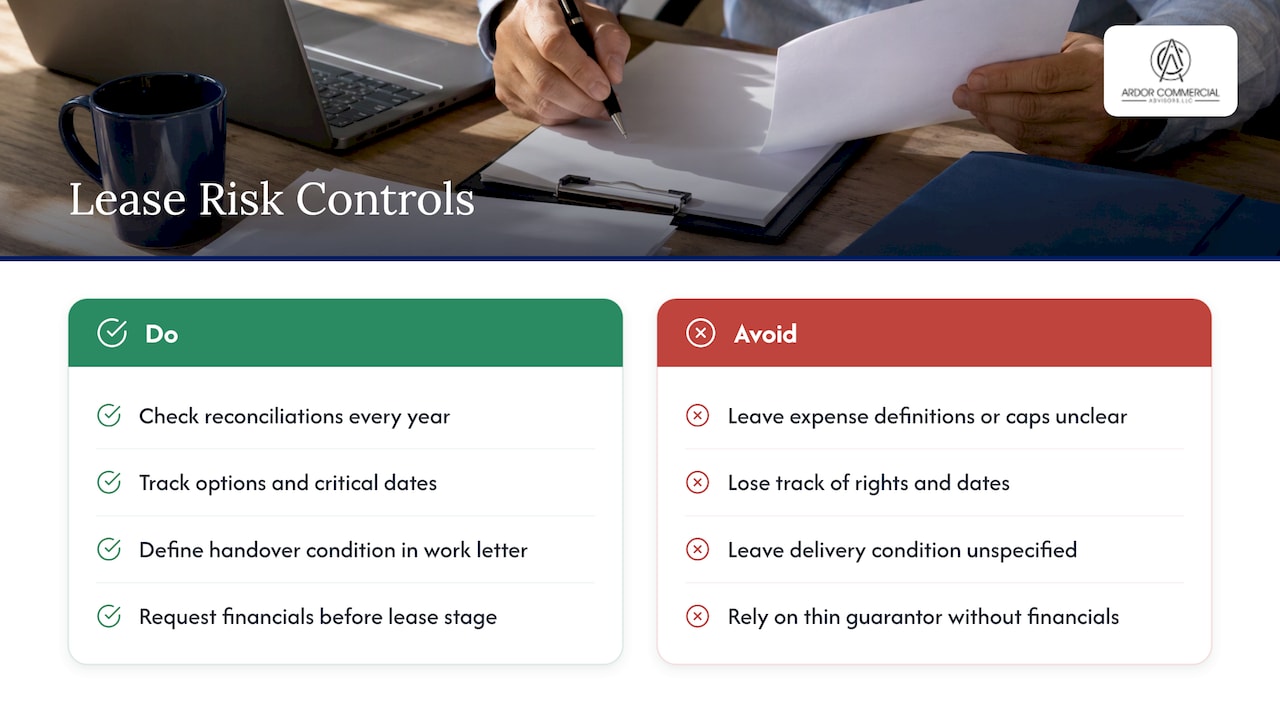
Operating-expense recoveries. If a lease is net, the owner recovers taxes, insurance and common area maintenance from tenants. Poorly written definitions or caps can leave money unrecovered. Reconciliations need to be checked every year, which is why we offer lease review and CAM reconciliation analysis.
Missed options and dates. Renewal windows, termination rights, expansion rights and rights of first refusal are easy to lose track of. A clean lease abstract puts every critical date and obligation on one page. A related right, covered in our right of first refusal guide, can also affect a later sale.
Unclear delivery condition. If the lease does not say what shape the space is in at handover, disputes follow. The work letter should settle it.
Soft tenant credit. A thin guarantor on a long lease is a risk that rent alone does not price. Your rep should ask for financial information before an LOI becomes a lease.
A worked example
Imagine a 3,000-square-foot medical suite in a Charlotte-area building that has been listed for several months. The owner has had inquiries but no signed lease. This is an illustration, not a client case.
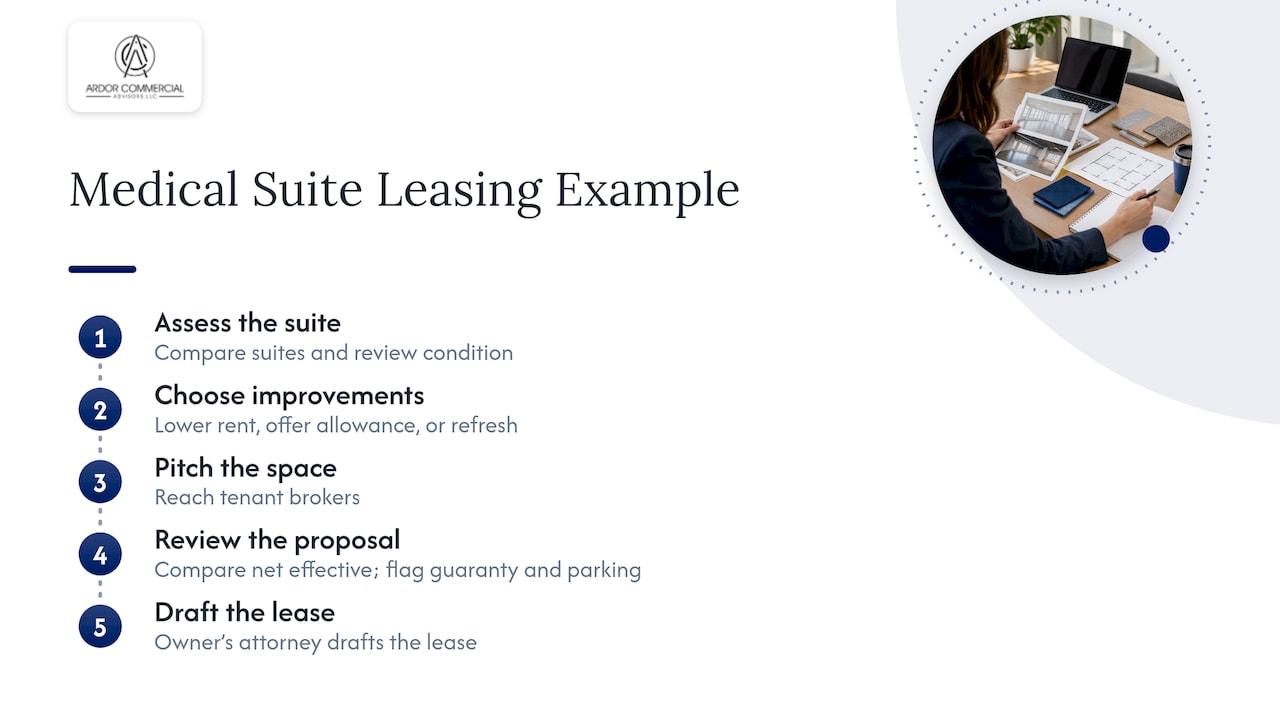
A landlord rep would begin by looking at comparable suites and the suite’s condition. The broker might find that the asking rent is out of step with recent leases, or that a tired reception area is turning off practitioners. The owner can then choose between lowering rent, offering a modest improvement allowance or refreshing the suite.
Next the rep pitches the space to tenant brokers who represent dentists, physical therapists and specialists. When a practice sends a proposal, the rep compares it against others on a net effective basis, flags the guaranty and parking issues, and counters on the terms that matter. The owner’s attorney then drafts the lease. Our commercial leasing timeline for medical and office tenants shows how long the other side of the table commonly expects the process to take.
How to choose a landlord representative
Use these criteria when you interview brokers.
- Local market evidence. Ask which Charlotte submarkets and property types they work in, and what comparable deals they can discuss.
- Clear agency terms. The listing or representation agreement should state the term, the commission structure, what happens with tenants who were already in talks, and what happens after expiration.
- A written marketing plan. Expect a list of channels, a schedule for reporting and a plan for tenant broker outreach.
- Financial fluency. The rep should explain net effective rent, expense recoveries and how a lease affects property value.
- Ability to cover adjacent needs. Leasing touches valuation, lease review, management and sometimes sale. A firm that can talk through all of it saves coordination time.
- Responsiveness. Prospects move on quickly if nobody returns calls.
Our perspective
We see landlord representation as more than putting a name on a listing. The owners we work with usually want three things: a tenant who pays, terms they understand, and a building that holds its value. Our approach is designed around tailored guidance from the first market conversation through the signed lease and beyond.
For medical and office buildings, we pay close attention to the details that decide a deal: buildout scope, operating-expense definitions, signage, guaranties and renewal rights. Customized market reporting helps an owner see where the space sits against nearby alternatives before a single tour happens.
Because we also handle tenant representation, property management, valuation and lease analysis, we see how each clause plays out from every chair at the table. That is why we bring owners the full picture rather than one piece of it.
Jim
Working with Ardorcre
We represent commercial owners across the Charlotte MSA on office, medical, retail and industrial properties. Our landlord representation sits alongside commercial leasing, property management, valuation and lease review, so one team can follow your property from pricing to signed lease to ongoing operations.
If you have vacant or expiring space, start with a conversation about the building, your goals and the market. See our full list of services or learn about our team. If you are also weighing a valuation before a sale or refinance, our commercial property valuation and DCF modeling service can inform the plan.
FAQ
Is landlord representation the same as property management?
No. A landlord rep focuses on leasing: finding tenants, negotiating terms and closing the lease. A property manager runs the building day to day, handling rent collection, maintenance and vendors. Many owners use both, and some firms provide both.
Who pays the landlord’s broker?
Compensation is set in the written agreement between owner and broker, and it varies by deal and market. Ask for the structure, the term and any tail provisions before you sign. Make sure you know whether a tenant’s broker will be paid from the same fee.
Can a broker represent both landlord and tenant?
It can happen only with written disclosure and consent from both sides, and it limits what the broker can advocate for. Most owners prefer a rep who works only for them on a given deal. North Carolina REALTORS publishes disclosure forms for lease transactions that explain the relationships.
When should I hire a landlord rep?
The best time is before space becomes vacant, ideally twelve months or more ahead of a major expiration. That gives time to set pricing, refresh the space and start conversations with tenant brokers. It is also useful when space has been sitting and you need a new strategy.
Do I still need a lawyer if I have a landlord rep?
Yes. A broker negotiates business terms but does not give legal advice. Have a North Carolina real estate attorney draft or review the lease before you sign it.