
A go dark clause lets a tenant stop operating at the leased premises while continuing to pay rent, without triggering a default under the lease. It is one of the most contested provisions in U.S. retail leasing, and for good reason: closed storefronts reduce foot traffic, harm tenant synergy, and can trigger co-tenancy rights for neighboring retailers, all while the landlord collects the same base rent and watches the center’s value erode. Large national retailers and restaurant chains typically push for these rights during portfolio restructurings, using their size as leverage. Landlords resist, or at minimum demand compensating protections.
Before either side moves:
- Tenants: Confirm the lease actually grants a go-dark right (many leases contain a continuous-operation covenant instead), check whether you are in monetary or material default (which can void the right), and identify any notice window required before you can exercise it.
- Landlords: On receiving any signal that a tenant may close, review your recapture-right language, calculate unamortized tenant improvement (TI) and brokerage costs, and audit co-tenancy clauses held by neighboring tenants that a dark space could trigger.
Key Takeaways
A go dark clause is a negotiated right, not a default lease term, and the specific conditions attached to it determine which party actually controls the outcome.
| Point | Details |
|---|---|
| Definition and scope | A go dark clause lets a tenant cease operations while paying rent; unconditional rights are rare and conditional versions are the norm. |
| Landlord recapture trigger | Dark-period thresholds of 180 consecutive days or 365 aggregate days are the most common benchmarks before recapture rights activate. |
| Co-tenancy cascade risk | A leased-but-dark anchor can still trigger co-tenancy remedies for in-line tenants, making dark-anchor carveouts a critical drafting priority. |
| Negotiation leverage | Tenants should focus on notice windows, permitted-closure lists, and cure rights; landlords should insist on reimbursement clauses and storefront-maintenance obligations. |
| Ardorcre advisory value | Ardorcre provides lease abstract reviews, tenant and landlord representation, and re-leasing strategy for retail properties in the Charlotte MSA. |
Table of Contents
- What does a go dark clause actually mean, and what variants exist?
- How landlords protect themselves: recapture rights, timelines, and remedies
- How going dark triggers co-tenancy clauses and kills percentage rent
- Negotiation checklist for tenants and landlords
- Sample go-dark clause with annotations
- What actually happens when a tenant goes dark: risks and mitigation
- An advisor’s perspective on go-dark negotiations
- Ardorcre’s lease analysis and representation services
- Sources
What does a go dark clause actually mean, and what variants exist?
The industry uses “go dark clause” and “go-dark provision” interchangeably. The formal lease term you will see in drafted agreements is often “Tenant’s Right to Go Dark” or a “Permitted Cessation” clause. Common drafting options run from unconditional rights to tightly conditioned ones, and the version in your lease determines almost everything about your negotiating position.
Unconditional go-dark rights
The tenant may cease operations at any time, for any reason, with no obligation beyond continuing rent. These are rare and typically reserved for national anchors with enough leverage to demand them. A landlord who signs one has essentially given away the continuous-operation covenant with nothing in return.
Conditional or limited go-dark rights
The tenant may go dark only after satisfying conditions: a minimum operating period (often two to five years of continuous operations before the right vests), a notice requirement, no existing monetary or material default, and sometimes a cap on how long the dark period may last before the landlord’s recapture right activates. This is the version most tenants actually get.
Portfolio-wide vs. site-specific rights
A portfolio-wide right lets a tenant exercise the clause at any location covered by a master lease or lease portfolio. A site-specific right applies only to the one premises. National chains often push for portfolio-wide language; landlords prefer site-specific so that a chain-wide restructuring does not simultaneously darken multiple centers.
Go-dim as a middle ground
“Go dim” language requires the tenant to maintain reduced hours or scaled-back operations rather than full closure. It preserves some pedestrian activity and storefront presence, which is why landlords propose it as a compromise when they cannot kill the go-dark right outright. A tenant operating two days a week at minimal hours is less damaging than a shuttered storefront.
Related terms you will see in the same clause
Continuous-operation covenant: The affirmative obligation to stay open during required hours. A go-dark right is essentially a negotiated carve-out from this covenant.
Permitted closure: Defined periods (remodels, force majeure events, holidays, casualty repairs) that do not count toward the dark-period tally.
Dark period: The defined window of consecutive or aggregate days of non-operation that triggers the landlord’s recapture right.
Recapture right: The landlord’s contractual right to terminate the lease and re-let the space once the dark period threshold is crossed.
| Feature | Unconditional right | Conditional right | Go-dim |
|---|---|---|---|
| Tenant flexibility | Maximum | Moderate | Limited |
| Landlord risk | Highest | Managed | Lowest |
| Typical tenant | National anchor | Mid-size chain | Any size |
| Rent obligation | Continues | Continues | Continues |
| Recapture trigger | Usually none | After dark-period cap | Usually none |
Pro Tip: Watch how the lease defines “reopening” for purposes of interrupting a dark period. Many leases include anti-avoidance language stating that a token reopening of fewer than [X] days, or a reopening not conducted in good faith as a normal retail operation, will not reset the dark-period clock. Tenants who plan a brief reopening to avoid a recapture trigger should confirm the lease does not already close that door.
How landlords protect themselves: recapture rights, timelines, and remedies
Recapture rights are the primary landlord tool for limiting the commercial harm of a dark space and preserving shopping-center value. The mechanics matter: a poorly drafted recapture clause can leave a landlord stuck with a dark tenant for years.

How recapture mechanics work
Once the dark period threshold is crossed, the landlord typically delivers written notice of its election to recapture. The tenant then has a cure window (often 30 to 60 days) to reopen before the termination takes effect. If the tenant does not reopen, the lease terminates and the landlord may re-let the space. Sample clauses commonly define the dark period as 180 consecutive days or 365 aggregate days, with the tenant continuing to pay rent through the landlord’s termination-notice period.
| Dark-period threshold | Operational meaning |
|---|---|
| 180 consecutive days | Landlord may recapture after roughly six months of uninterrupted closure |
| 365 aggregate days | Landlord tracks cumulative dark days across the lease term; intermittent closures count |
| 90 consecutive days | Aggressive landlord position; common in high-traffic centers with anchor dependency |
Landlord remedies beyond recapture
- Terminate and re-let: The most common remedy. The landlord recaptures the space and re-leases it, ideally at market rent.
- Seek damages: In some jurisdictions, landlords can pursue lost percentage rent and consequential damages if the lease expressly preserves that right.
- Reimbursement of unamortized TI and brokerage costs: Landlords routinely negotiate the right to recover unamortized tenant improvement allowances and brokerage fees if the tenant exercises a go-dark right or if recapture is triggered. The reimbursement is typically calculated on a straight-line amortization over the lease term.
- Withhold go-dark privileges: Practice-note guidance recommends conditioning the right on the tenant being current on rent and not in material default at the time of election.
Legal-risk callout: Cure rights and force majeure clauses can complicate recapture. If the lease grants the tenant a cure period for any default, a court may treat the landlord’s recapture notice as a default notice subject to that cure window, even when the recapture clause does not expressly say so. Force majeure provisions that excuse non-operation (pandemics, government orders) typically toll the dark-period clock, so landlords should confirm their recapture clause carves out only genuinely involuntary closures.
How going dark triggers co-tenancy clauses and kills percentage rent
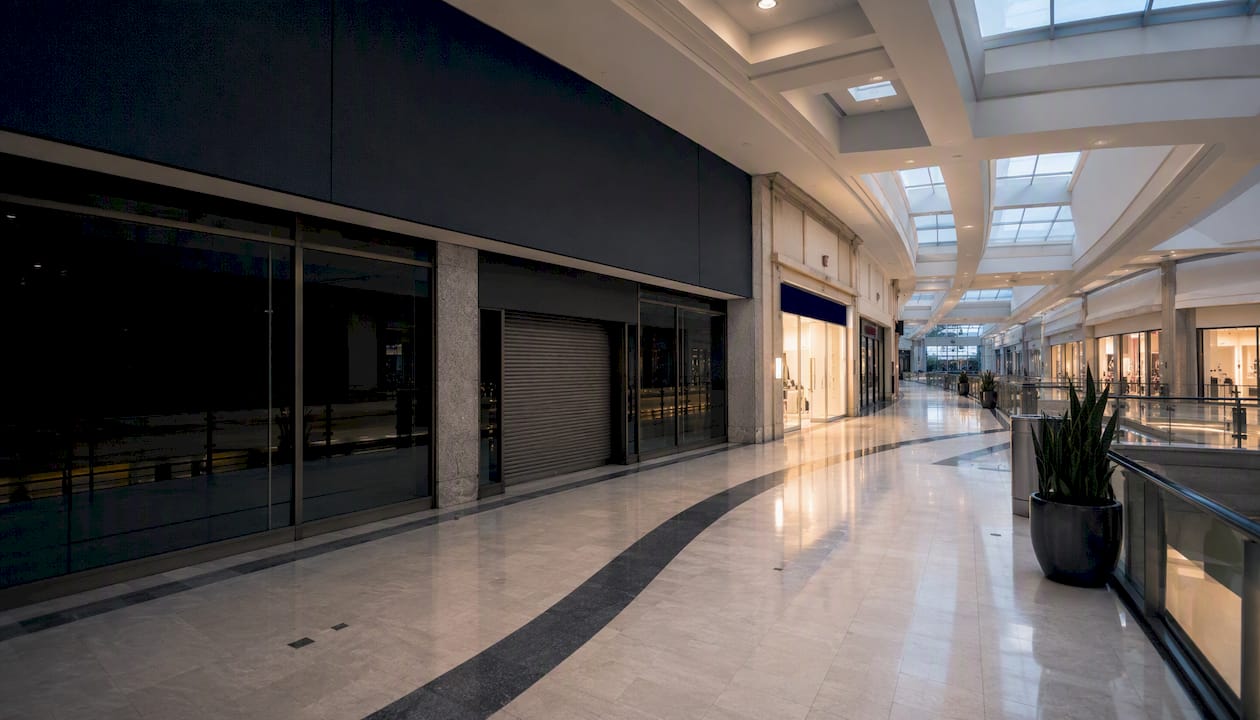
The cascading effects of a dark space are often worse than the direct rent loss. Co-tenancy provisions frequently include specific language that triggers when an anchor is leased but dark, and that “dark anchor” trigger is a core reason landlords fight broad go-dark rights in the first place.
The dark-anchor problem
An anchor tenant that goes dark but remains on the lease is legally occupying the space. That distinction matters because many co-tenancy clauses are written to trigger on the anchor “ceasing operations” rather than “vacating,” meaning a leased-but-dark anchor still fires the co-tenancy remedy. Neighboring in-line tenants may then be entitled to pay reduced percentage rent, switch to a lower base rent, or even terminate their own leases.
Percentage rent: the quiet loss
When a tenant goes dark, sales stop. No sales means no percentage rent above the breakpoint. For a landlord whose pro forma assumed meaningful percentage rent from a high-volume retailer, that loss compounds the foot-traffic damage. The landlord loses both the ancillary income and the draw that justified neighboring tenants’ rents.
Scenario breakdown
- Anchor goes dark: In-line tenants with dark-anchor co-tenancy language may immediately trigger rent reductions or termination rights. The landlord faces a potential cascade of rent concessions across the center.
- In-line tenant goes dark: Effects are more contained. Neighboring tenants rarely have co-tenancy clauses tied to a single in-line operator. The primary damage is foot-traffic loss and the visual blight of a shuttered storefront.
Drafting tips to limit contagion
- Define “co-tenancy anchor” by name and square footage, not just by operational status, so a temporary closure does not automatically qualify as a co-tenancy event.
- Build in a measurement window (for example, 90 consecutive days of non-operation) before the co-tenancy remedy activates, giving the anchor time to reopen or the landlord time to recapture.
- Include a “dark-anchor carveout” that suspends co-tenancy remedies during the landlord’s active re-leasing period, provided the landlord is diligently marketing the space.
- Tie alternate co-tenancy triggers to a replacement tenant’s opening rather than the original anchor’s closure, so the remedy expires when a new anchor opens.
Negotiation checklist for tenants and landlords
Go-dark clauses are negotiation leverage for large national retailers, but the specific language determines who actually holds the leverage once the clause is in the lease. Use the checklists below to brief counsel or prepare for a negotiation session.
Tenant-side asks
- Broad or unconditional go-dark language with no minimum operating period, or the shortest vesting period you can negotiate.
- Minimal maintenance obligations while dark: exterior appearance and security only, not full HVAC or interior upkeep.
- Short notice windows: 30 days or less before exercising the right, rather than the 90–180 days landlords typically propose.
- Cure rights: A right to reopen within 30–60 days of a recapture notice to avoid lease termination.
- Portfolio carve-ins: If you operate multiple locations with the same landlord, negotiate a portfolio-wide right so a single restructuring decision covers all sites.
- Permitted-closure list: Confirm that remodels, force majeure events, and seasonal closures are excluded from the dark-period tally.
Landlord-side asks
- Minimum operating period: Require the tenant to operate continuously for at least two to three years before the go-dark right vests.
- Notice requirements: Push for 90–180 days’ advance written notice before the tenant may go dark, giving time to find a replacement.
- Short dark-period caps: Set the recapture trigger at 90 to 180 consecutive days, not 365 aggregate.
- Reimbursement clauses: Require the tenant to repay unamortized TI allowances and brokerage fees on a straight-line basis if the go-dark right is exercised.
- Condition on no default: The tenant must be current on all monetary and material obligations at the time of election.
- Restrictions during option periods: Prohibit exercise of the go-dark right during any renewal option period, or make exercise a condition that voids the option.
- Storefront maintenance: Require the tenant to maintain exterior signage, lighting, and a clean storefront appearance throughout any dark period.
Pro Tip: A practical compromise that often closes deals: agree to a limited dark window (say, 180 consecutive days) paired with a storefront-appearance obligation and a landlord right to install temporary art or branding on the windows during the dark period. The tenant gets operational flexibility; the landlord gets a presentable center. Neither side gives up its core position.
Sample go-dark clause with annotations
The model language below is adapted from structures commonly found in U.S. retail leases. Variable fields appear in brackets. Review with qualified counsel before use.
Section [X]. Tenant’s Right to Go Dark; Landlord’s Recapture Right.
(a) Tenant’s Election. Provided Tenant is not in monetary default or material non-monetary default under this Lease at the time of election, Tenant may cease retail operations at the Premises (“Go Dark”) upon not less than [30/60/90] days’ prior written notice to Landlord, provided that Tenant has continuously operated the Premises for retail purposes for a period of not less than [24/36] months following the Commencement Date (the “Minimum Operating Period”).
(b) Continuing Obligations. During any period in which Tenant has elected to Go Dark, Tenant shall: (i) continue to pay all Base Rent and Additional Rent as and when due; (ii) maintain the Premises in good condition and repair, including exterior signage, lighting, and storefront appearance; (iii) maintain required insurance; and (iv) comply with all other terms of this Lease.
© Permitted Closures. The following shall not constitute a Go Dark period or count toward the Dark Period defined below: (i) closures for remodeling not to exceed [90] consecutive days; (ii) closures due to Force Majeure events; (iii) closures for national holidays or seasonal periods consistent with Tenant’s standard operating calendar.
(d) Dark Period; Landlord’s Recapture Right. If Tenant ceases retail operations for more than [180] consecutive days or [365] aggregate days in any Lease Year (the “Dark Period”), Landlord may, by written notice delivered within [60] days after the expiration of the Dark Period, elect to terminate this Lease effective [30] days after delivery of such notice (the “Recapture Notice”). Tenant shall have the right to cure by reopening for business within such [30]-day cure period, in which event the Recapture Notice shall be deemed withdrawn.
(e) Reimbursement. If Landlord delivers a Recapture Notice and Tenant does not cure, Tenant shall reimburse Landlord for the unamortized portion of any tenant improvement allowance and brokerage commissions paid by Landlord in connection with this Lease, calculated on a straight-line basis over the initial Lease Term.
(f) Anti-Avoidance. A reopening of fewer than [10] consecutive business days, or a reopening not conducted as a bona fide retail operation open to the general public during normal business hours, shall not interrupt or reset the Dark Period.
Annotations:
- (a) Notice window: Landlords typically propose 90–180 days; tenants push for 30. The minimum operating period prevents a tenant from signing a lease, collecting TI, and immediately going dark.
- (b) Continuing obligations: Maintenance and insurance obligations during a dark period are non-negotiable from a landlord’s perspective. In a triple net lease, the tenant’s pass-through obligations for taxes, insurance, and CAM typically survive the dark period as well.
- © Permitted closures: This list protects tenants from having routine closures counted against them. Tenants should push to include rebranding and renovation periods.
- (d) Dark period thresholds: 180 consecutive days and 365 aggregate days are the most common benchmarks in published sample clauses. A 90-day consecutive threshold is aggressive and typically reserved for high-traffic anchored centers.
- (e) Reimbursement: Straight-line amortization is standard. Confirm the lease specifies the amortization period matches the initial lease term, not any renewal periods.
- (f) Anti-avoidance: Without this provision, a tenant could reopen for a weekend every six months and indefinitely reset the clock.
Pro Tip: If the lease contains a co-tenancy clause held by neighboring tenants, add a cross-reference in subsection (d) confirming that the landlord’s recapture right activates before any co-tenancy remedy matures. That sequencing can prevent a landlord from losing both the anchor and the in-line tenants simultaneously.
What actually happens when a tenant goes dark: risks and mitigation
The real damage from a dark space compounds quickly. Landlords face foot-traffic loss, harm to tenant synergy, and the risk of triggering co-tenancy remedies for neighboring retailers, all at once. Tenants face their own exposure, which is easy to underestimate.
Landlord risks:
- Foot-traffic decline that reduces sales for all in-line tenants, depressing percentage rent across the center.
- Re-leasing difficulty: a dark space in a struggling center is harder to fill, and the landlord may need to offer significant TI to attract a replacement.
- Cascading co-tenancy remedies from in-line tenants whose leases contain dark-anchor triggers.
- Valuation impact: a center with a dark anchor trades at a higher cap rate (lower value), directly affecting the landlord’s debt-service coverage and refinancing capacity.
- Reputational damage to the center that makes future leasing harder.
Tenant risks:
- Loss of assignment value: a lease with an active go-dark election is harder to assign or sublease, because the assignee inherits the dark-period clock.
- Reputational effects within the center: other tenants and the landlord may resist future negotiations or renewals.
- Exposure to reimbursement claims for unamortized TI and brokerage fees if recapture is triggered.
Mitigation steps for both sides
- Storefront maintenance obligation: Require the dark tenant to maintain exterior lighting, clean windows, and updated signage. A well-kept dark storefront is significantly less damaging than a shuttered one.
- Landlord re-leasing protocol: Begin active marketing immediately on notice of a potential dark period, rather than waiting for the recapture trigger. Early marketing shortens the actual vacancy window.
- Coordinated center marketing: Some landlords negotiate the right to install temporary art installations or pop-up activations in dark spaces to maintain foot traffic during the re-leasing period.
- Capped dark periods with rolling notice: Structure the dark-period cap so that the landlord’s recapture notice must be delivered within a defined window after the threshold is crossed. A landlord who misses the window loses the recapture right for that cycle.
- Notice-and-relief procedures: Build in a formal notice-and-conference requirement before either side escalates to termination, creating a structured opportunity to negotiate a lease modification, rent deferral, or co-tenancy carveout before the situation becomes litigation.
For context on how anchor closures ripple through retail centers at a market level, the Big Lots closures case study shows exactly how quickly a single dark anchor can reshape a center’s leasing posture.
An advisor’s perspective on go-dark negotiations
The most common mistake both sides make is treating a go-dark clause as a binary: either the tenant gets it or they don’t. In practice, the clause is a bundle of variables, and the real negotiation is over which variables move.
Tenants with genuine portfolio leverage, a national credit rating, and multiple locations in the same center have the strongest hand. They can often get a conditional right with a 30-day notice window and a 180-day dark-period cap, which is functionally close to an unconditional right for a tenant that plans its closures carefully. Tenants without that leverage should focus on the permitted-closure list and the anti-avoidance language, because those provisions determine whether a remodel or a slow quarter accidentally triggers a recapture.
Landlords, on the other hand, should resist the temptation to fight the go-dark right entirely when the tenant has leverage. A well-drafted conditional right with a short dark-period cap, a reimbursement clause, and a storefront-maintenance obligation is far better than a continuous-operation covenant the tenant will simply breach and litigate. The recapture right is the real protection, and it only works if the landlord has the operational capacity to re-let quickly. That means having a retail site selection strategy and a replacement-tenant pipeline before the dark period starts, not after.
The moment to bring in a commercial real estate advisor is before the lease is signed, not after the tenant sends a go-dark notice. A lease abstract review at the due-diligence stage will surface go-dark language, recapture mechanics, and co-tenancy interactions that are easy to miss in a 60-page lease. By the time a tenant has gone dark, the landlord’s options are defined entirely by what the lease already says.
Ardorcre’s lease analysis and representation services
Navigating a go-dark clause negotiation without a commercial advisor is the fastest way to leave leverage on the table. Ardorcre’s advisors work on both sides of the table in the Charlotte MSA, providing lease analysis, tenant representation, landlord representation, and re-leasing strategy for retail and multi-tenant commercial properties.
For tenants, that means a clause-by-clause read of your go-dark language before you exercise it, including a check of your co-tenancy exposure and reimbursement risk. For landlords, it means a recapture-right audit, a re-leasing timeline, and a valuation analysis showing how a dark space affects your asset’s debt-service coverage. If you have not had your lease abstracted recently, an Ardorcre lease abstract review is the fastest way to know exactly what rights you hold and what obligations survive a dark period. Contact Ardorcre to schedule a lease review with an advisor who has worked through these negotiations from both sides.
Sources
- Go Dark | Practical Law
- Top 10 Issues In Negotiating Go Dark Provisions In Retail Leases
- Tenant’s Right to Go Dark; Landlord’s Recapture Right
- Go Dark Provision Definition
This article is general information, not a substitute for advice from a qualified lawyer. Consult a qualified legal professional about your own circumstances before acting on anything here.