
A lease escalation clause is the provision that spells out how and when rent will climb during the term, whether by a flat percentage, an inflation index, or a scheduled step. Before you sign or renew, check three things: the escalation method, whether it compounds, and whether caps, floors, or exclusions limit the swings. Skip any one of these and you’re guessing at your real occupancy cost for the next five to ten years.
You’ll usually find this language tucked into the “Rent,” “Rent Adjustments,” or “Operating Expenses” section of the lease. If a broker or landlord hands you a draft without pointing to it, ask directly. It’s there.
Key Takeaways
Every lease escalation clause hinges on three variables: the method used, whether it compounds, and whether caps or floors limit the outcome.
| Point | Details |
|---|---|
| Identify the method first | Confirm whether the clause is fixed, CPI-indexed, step-scheduled, or a market reset before modeling any cost. |
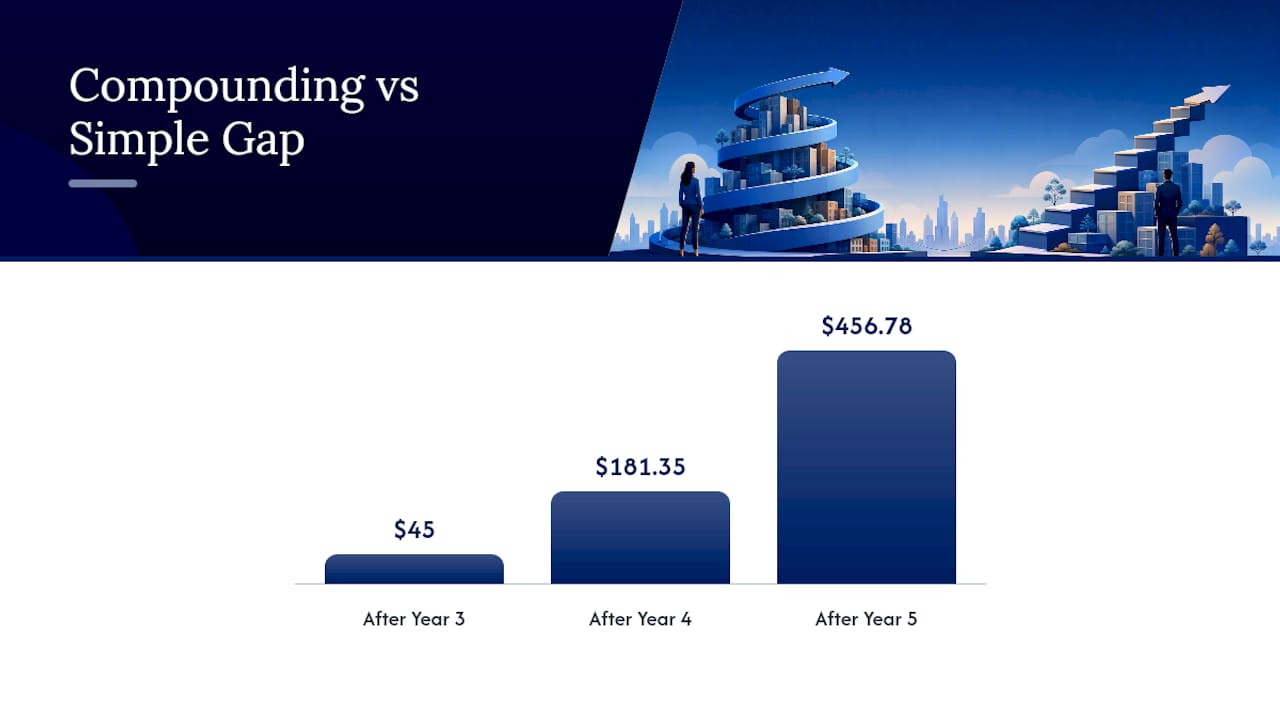
| Compounding changes everything | A compounding clause and a simple clause at the same rate diverge significantly by year five or ten. |
| Negotiate caps and definitions | Push for a named CPI series, a measurement month, and explicit compounding language to avoid disputes. |
| Model worst-case scenarios | Budget an uncapped CPI spike alongside your base case, especially for leases without a rate ceiling. |
| Confirm the clause’s real objective | Some clauses, like a terminal rental adjustment clause, manage residual value rather than raising rent, so confirm the purpose before you model it. |
Table of Contents
- What Is a Lease Escalation Clause?
- What Are the Common Types of Rent Escalation Clauses?
- How Do You Calculate a Rent Escalation Increase?
- What Should You Negotiate in an Escalation Clause?
- Who Benefits and Who Takes on the Risk?
- How Do Escalation Clauses Affect Lease Budgeting?
- Sample Escalation Clause Language You Can Adapt
- Get Help Reviewing Your Lease Terms
- Where to Verify Escalation Terms and Index Data
- An Editorial Take: Lease Escalation Clauses Deserve More Scrutiny
- Frequently Asked Questions
- Sources
What Is a Lease Escalation Clause?
An escalation clause is a self-executing mechanism: once triggered, rent adjusts automatically, without either party renegotiating from scratch. Legally, it’s defined as a lease or contract provision that lets prices or rents shift to reflect changing market conditions such as inflation or tax changes. No new signatures, no fresh negotiation, just a formula doing its job on a set date.

Triggers vary by lease. Some fire on the lease anniversary, others on the calendar year regardless of start date, and others only at renewal or during an annual operating expense reconciliation. For a lease abstract, the one line worth flagging reads something like: “Rent escalates [method] on [trigger date], subject to [caps/floors].” That single sentence tells a reviewer everything they need to model the next renewal.
What Are the Common Types of Rent Escalation Clauses?
Most commercial leases use one of five structures, and each shifts risk differently between landlord and tenant.
- Fixed percentage increases: Rent rises a set percent (often 2% to 3%) annually. Predictable for both sides, which is exactly why tenants push for it.
- CPI-indexed adjustments: Rent tracks a published inflation index. Landlords like it because it protects real income during inflationary years.
- Operating expense or pass-through escalations: Rent adjusts based on the tenant’s share of rising building costs like taxes, insurance, and common area maintenance, reconciled annually against a base year.
- Dollar-step (scheduled) increases: A predetermined rent schedule locks in exact dollar amounts for each year, common in longer industrial and net-lease deals.
- Fair market value resets: Rent resets to prevailing market rates at defined intervals, typically at renewal, often via appraisal or broker opinion.
Fixed percentage increases, CPI-indexed adjustments, dollar-step schedules, and market resets remain the most common escalation methods in commercial leasing, and they produce materially different cost outcomes over a multi-year term.
Pro Tip: Always confirm whether an increase compounds on the prior year’s rent or applies simply to the original base. A 3% compounding clause and a 3% simple clause on the same $50,000 base diverge by thousands of dollars by year five.
How Do You Calculate a Rent Escalation Increase?
The math is straightforward once you know which formula applies.
Formula box:
- Compound increase: New Rent = Base Rent × (1 + rate)^year
- Simple increase: New Rent = Base Rent × (1 + rate × year)
- CPI adjustment: % change = (Index at time t ÷ Index at time t−1) − 1
Three worked examples show how this plays out:
- Fixed 3% compounding on $50,000 base. Year 1: $50,000. Year 5: $56,275. Year 10: $65,238. Compare that to simple 3% (no compounding): Year 5 rent is $57,500, but the cumulative total paid over ten years under simple growth is higher than under compounding, since compounding builds on an already-inflated base each year.
- CPI-indexed adjustment. If the relevant index reads 310 this period versus 300 the year before, the increase is (310 ÷ 300) − 1 = 3.33%, applied to the prior year’s rent. The Bureau of Labor Statistics tracks the owners’ equivalent rent and rent series commonly cited in these clauses, and which specific series the lease names matters enormously.
- Step schedule. Year 1: $50,000. Year 2: $52,000. Year 3: $54,500. No formula, no index, just numbers negotiated up front.
Proration matters at lease start if the anniversary date falls mid-month, and calendar-year triggers can create a partial-year adjustment in the first period that catches tenants off guard.
What Should You Negotiate in an Escalation Clause?
Before signing, walk through this checklist line by line:
- Is there a cap limiting the maximum annual increase and a floor guaranteeing a minimum?
- Which CPI index is named specifically, and what is the measurement month?
- Does the clause state compounding vs. simple in plain language, not just implied?
- What costs are excluded from operating expense pass-throughs (capital improvements, management fee markups)?
- Is there an audit right letting the tenant verify the landlord’s reconciliation math?
- For market resets, what appraisal or broker-opinion process resolves a valuation dispute?
A few sample phrases worth proposing in redlines:
- “Annual increases shall not exceed [X]% nor fall below [Y]%.”
- “CPI shall mean the CPI-U, U.S. City Average, as published for [month].”
- “Increases shall be simple, calculated against the original Base Rent, not compounded.”
- “Tenant shall have the right to audit Landlord’s operating expense statements within [90] days of receipt.”
Pro Tip: When landlords resist a hard cap, propose a fixed dollar-step schedule instead. It gives them predictable growth and gives you budget certainty, without either side fighting over index methodology every year.
Who Benefits and Who Takes on the Risk?
Tenants gain predictability with fixed or capped clauses but risk budget shocks if CPI spikes uncapped. Landlords gain inflation protection with indexed clauses but risk disputes if the formula or base year is ambiguous.
- Tenant upside: locked-in growth rates, easier multi-year budgeting.
- Tenant downside: uncapped CPI exposure during high inflation years.
- Landlord upside: rent that keeps pace with real costs and market value.
- Landlord downside: disputes over unclear compounding language or vague market-reset criteria.
Ambiguous drafting is where these clauses backfire most often. Small language differences between compounding and simple calculations, or unclear anniversary definitions, compound into real financial gaps over five to ten years. These clauses are negotiable, but only if drafted with precision. A vague clause invites a dispute that neither side wins outright.
How Do Escalation Clauses Affect Lease Budgeting?
Run at least two or three scenarios before finalizing any forecast, including a worst-case uncapped CPI spike, not just the expected-case number.
- Build a base case, a moderate-inflation case, and a stress case with no cap protection.
- Document the index source and measurement month used in every forecast, since index selection changes the outcome materially.
- Flag variable rent under ASC 842: escalations tied to an index typically aren’t included in the straight-line rent calculation until they’re known, which can create a mismatch between GAAP expense and actual cash rent paid.
- Keep documentation supporting every escalation assumption for auditors and lenders reviewing debt service coverage.
Owners running triple net structures should also review how expense pass-throughs interact with escalation math, since the two mechanisms often stack.
Sample Escalation Clause Language You Can Adapt
Fixed percentage. “Base Rent shall increase by three percent (3%) annually, compounded, on each anniversary of the Commencement Date.” Swap “compounded” for “on the original Base Rent” to make it simple instead.
CPI-indexed. “Base Rent shall adjust annually based on the percentage change in the CPI-U for [month], subject to a floor of one percent (1%) and a cap of five percent (5%).” Remove the cap/floor language if the landlord insists on uncapped indexing.
Expense pass-through. “Tenant shall pay its Proportionate Share of Operating Expenses exceeding the Base Year amount, excluding capital expenditures and management fees above [X]%.”
Market reset. “At each Option Period, Base Rent shall reset to Fair Market Rent as determined by an independent appraiser, or by broker opinion if the parties cannot agree within [30] days.” Always reconcile any drafted schedule against a spreadsheet model before finalizing, since transcription errors between contract text and financial models are a common and costly mistake.
Get Help Reviewing Your Lease Terms
Modeling a rent escalation clause correctly matters just as much for a landlord underwriting future income as it does for a tenant budgeting occupancy costs five years out. If you’re evaluating how projected rent growth affects loan sizing, our DSCR guide for commercial real estate walks through how lenders factor escalating rent into debt service coverage. And if you’d rather have someone pull the escalation language, caps, and reconciliation mechanics out of a lease draft for you, Ardorcre’s lease abstract service does exactly that for tenants, landlords, and property managers across the Charlotte MSA.
Where to Verify Escalation Terms and Index Data
- The Cornell Legal Information Institute offers the clearest plain-language legal definition of an escalator clause.
- The BLS CPI factsheet explains exactly how the rent and owners’ equivalent rent series are constructed, useful before naming an index in a redline.
- LeasePilot’s drafting guide covers common language mistakes in detail.
- For due diligence before closing, review Ardorcre’s estoppel certificate guide to confirm escalation terms match what’s actually being enforced.
- EchoPM’s guide to tenant-friendly lease terms offers additional negotiation language worth reviewing before redlining.
An Editorial Take: Lease Escalation Clauses Deserve More Scrutiny
Most advice on escalation clauses treats the negotiation as a fight over the number, 2% versus 3%, capped CPI versus uncapped. That’s the wrong fight. The real risk sits in the definitional language nobody reads closely: which CPI series, which measurement month, whether “increase” means compounded or simple. I’ve seen more disputes trace back to a missing word than to an aggressive rate.
The conventional wisdom says tenants should always chase a hard cap. Sometimes a dollar-step schedule serves them better, because it removes the index argument entirely and lets both sides budget with certainty. Landlords resist caps reflexively, but a well-built step schedule often gets them to yes faster than a capped CPI clause ever will.
If you take one thing from this article into your next lease review, make it this: read the compounding language before you look at the rate. A precise 4% clause beats an ambiguous 3% clause every time it gets tested in year seven.
Frequently Asked Questions
Is a lease escalation clause negotiable?
Yes. Caps, floors, index selection, measurement month, and compounding language are all standard negotiation points, particularly in a market where tenants have leverage.
What’s the difference between a fixed and a CPI-indexed escalation clause?
A fixed clause raises rent by a set percentage regardless of market conditions. A CPI-indexed clause ties the increase to an actual inflation index, so the amount varies year to year.
Do all escalation clauses raise rent?
No. Some clauses, like a terminal rental adjustment clause used in equipment leasing, manage residual value risk rather than increasing rent. Confirm the clause’s actual purpose before modeling its financial impact.
How does an escalation clause affect ASC 842 accounting?
Variable rent tied to an index generally isn’t included in the straight-line rent calculation until the increase is known, which can create a gap between reported GAAP expense and actual cash rent.
What happens if a lease doesn’t cap CPI increases?
Rent can rise sharply during high-inflation years with no ceiling, which is why tenants often negotiate a cap even when accepting CPI-based indexing.
This article is general information, not a substitute for advice from a qualified lawyer. Consult a qualified legal professional about your own circumstances before acting on anything here.
Sources
- Escalator clause — Wex, Legal Information Institute (Cornell Law School)
- Owners’ equivalent rent and rent — Bureau of Labor Statistics (CPI factsheet)
- Rent escalation clauses: The complete guide to getting them right — LeasePilot Blog