
Property management runs the day-to-day; asset management runs the investment. A single medical office building usually needs only a property manager to handle leasing and maintenance. Once you own more than a few properties, or you’re carrying significant capital projects and investor reporting, asset management earns its fee by protecting the return, not just the roof.
TL;DR:
- Owners of more than five properties or complex portfolios should consider asset management to handle capital planning and investor reporting.
- Property managers primarily focus on leasing, tenant relations, and short-term operations, with fees typically based on rent percentages or flat rates.
- Asset management decisions revolve around NOI growth, IRR, and market cap rates, with final sign-off on major CapEx above set thresholds.
- Regular coordination between property and asset management is essential to prevent 10-15% NOI leakage caused by operational silos.
- Medical office properties with multiple tenants or near-term lease rollovers especially benefit from asset-level oversight to optimize refinance and sale timing.
Table of Contents
- Property Management vs Asset Management: The Operational Layer
- Asset Management: The Strategy Layer Above the Building
- Comparing Scope, Time Horizon, and Accountability
- When to Hire Property Management, Asset Management, or Both
- Keeping Property and Asset Management in Sync
- How Ardorcre Applies This Split to Medical Office and Office Assets
- The Mistake I See Most Often
- What Ardorcre Handles for Office and Medical Office Owners
- Sources
Property Management vs Asset Management: The Operational Layer
Property management is the ground-floor function for tasks like leasing and maintenance, and contracts should clearly specify scope as explained in commercial landscape maintenance contract guides. It keeps tenants happy, rent flowing, and buildings running. Property management covers leasing, tenant screening, rent collection, and lease renewals, along with maintenance coordination, vendor contracts, emergency repairs, and unit or suite turns between tenants.
On the financial side, property managers build the operating budget, maintain the rent roll, and manage short-term cash flow. That’s a different job from long-term capital strategy, and it’s worth keeping the line clear.
Fee structures vary by market and asset type:
- Percentage of collected rent, typically 4% to 10% depending on property type and size
- Flat fee per unit, common in smaller residential or light commercial portfolios
- Hybrid models, blending a base fee with leasing commissions or renewal bonuses
In many states, a real estate license is required to operate as a property manager, so confirm the manager’s credentials before signing a contract.
Owners should track a handful of numbers every month: occupancy rate, average turnaround time to re-lease a vacant unit, delinquency rate on rent collection, and the size of the maintenance backlog. A property manager who can’t produce these four figures on demand isn’t running a tight operation. SmartRent’s breakdown of the two functions confirms this operational scope stays distinct from portfolio-level strategy, even as reporting tools get better.
Asset Management: The Strategy Layer Above the Building
Asset management sits above the property, making decisions about the investment itself rather than the tenants inside it. It starts at acquisition, with diligence on the deal, and continues through the entire hold period as the asset manager decides whether to optimize, refinance, or sell.
Capital planning is where asset management earns its keep. That means prioritizing which capital expenditures actually move value, modeling projected returns on those projects, and evaluating refinancing scenarios against debt service coverage ratio, or DSCR, requirements set by lenders. Asset managers also handle investor and lender communications, and coordinate with tax and legal advisors on structuring and disposition timing.
The metrics differ sharply from the property level:
- Net operating income (NOI) growth, the clearest signal of whether the asset is actually improving
- Internal rate of return (IRR), used to judge whether a hold or sale makes financial sense
- Cap rate movement, which tells you how the market is pricing similar assets
- Cash-on-cash return and leverage ratios, both critical when a refinance or CMBS loan is coming due
Asset managers rely on these exact metrics to make hold, sell, or refinance calls, which is a fundamentally different exercise than filling a vacant suite.
Comparing Scope, Time Horizon, and Accountability
The clearest way to separate these roles is to line them up side by side across the dimensions that actually create friction between owners and their teams.
| Dimension | Property Management | Asset Management |
|---|---|---|
| Scope | Building operations, tenants, vendors | Portfolio strategy, capital structure, disposition |
| Time horizon | Daily to monthly | Quarterly to multi-year hold period |
| Primary data inputs | Rent roll, work orders, maintenance logs | NOI trends, market comps, debt terms |
| Typical outputs | Occupancy reports, budgets, lease renewals | Investment memos, refinance models, hold/sell analysis |
| CapEx approval | Recommends and executes below a set threshold | Approves major capital projects and funding source |
| Typical fee basis | Percentage of rent or flat per unit | Percentage of asset value or profit share |
| Typical credentials | State license, IREM/CPM or NARPM designation | CCIM or CFA, investment analysis background |
The overlap almost always shows up around capital expenditures. Property managers spot the problem, whether it’s a failing HVAC unit or a roof past its useful life, but asset managers should retain final sign off on anything above a set dollar threshold, because that decision affects portfolio-level debt covenants and investor return expectations.
Pro Tip: Put one sentence in every management contract: “Capital expenditures above $[X] require asset manager approval before work begins.” That single line prevents more owner-manager disputes than any other clause in the agreement.
When to Hire Property Management, Asset Management, or Both
Most owners start with property management alone, and that’s the right call for a single building or a small handful of assets in one market. Asset management becomes valuable once owners need portfolio-level strategy, capital planning across multiple properties, or formal reporting to outside investors.
A few signals mean it’s time to add the strategic layer:
- You own more than five properties, or the portfolio has grown complex enough that no single person can track it all
- Your assets are spread across multiple submarkets or you can’t personally inspect them regularly
- You have outside investors or lenders who expect formal quarterly reporting
- A major capital project or refinance is coming due within 12 to 24 months
- You’re weighing a sale, a 1031 exchange, or a hold-versus-refinance decision with real dollars at stake
Run this checklist honestly. If three or more apply, the cost of hiring asset-level advisory almost always pays for itself in avoided mistakes on timing and financing.
Keeping Property and Asset Management in Sync
The single biggest threat to returns isn’t bad management on either side. It’s the gap between them. Siloed operations between property and asset management can cause 10% to 15% of NOI leakage when the two functions don’t share data on a regular cadence.
The fix is a monthly sync covering four numbers: rent roll, maintenance spend, vacancy, and arrears. Catalyst Equity Partners recommends exactly this data set flow from property operations into a portfolio dashboard the asset manager reviews monthly, not quarterly.
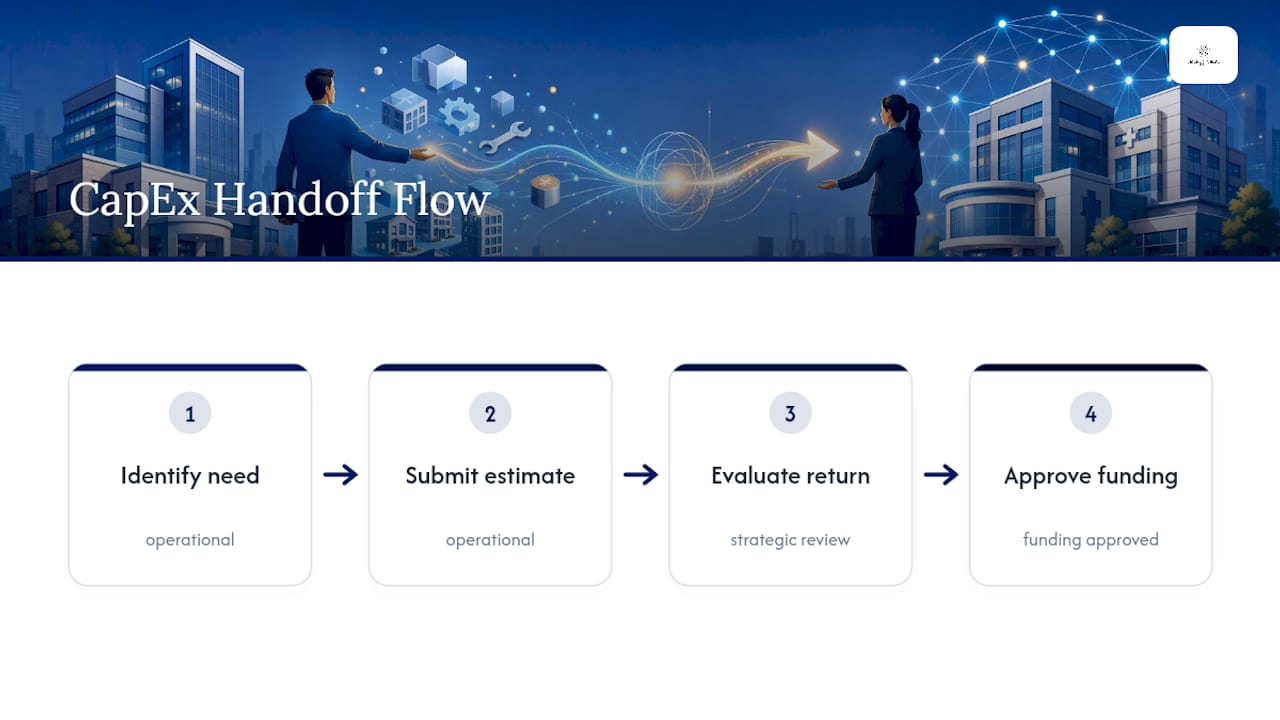
CapEx should move through defined steps: property manager identifies the need, submits a cost estimate, asset manager evaluates the return against portfolio priorities, and only then does funding get approved. Tools like the platforms compared in Yardi vs AppFolio can automate this handoff so nothing gets lost in an email thread.
How Ardorcre Applies This Split to Medical Office and Office Assets
Medical office is where this split matters most. A single-tenant medical building with a stable practice usually only needs solid property management. But a multi-tenant medical office or a suburban office building carrying near-term lease rollover needs asset-level advisory, especially when tenant improvement timelines start affecting DSCR ahead of a refinance.
Capital plans for medical tenants often require TI work 12 to 18 months before a lease starts, and that timing directly affects loan sizing and refinance eligibility. If you’re facing a CMBS maturity or considering leasing versus buying your own practice space, the right move is auditing your CapEx pipeline now and running a hold-versus-sell stress test before the decision gets made for you.

The Mistake I See Most Often
Owners routinely ask their property manager to also think like an asset manager, especially once a portfolio crosses five or six properties. It rarely works. One person can’t run daily leasing and maintenance while also modeling refinance scenarios and negotiating with lenders. The operational fire always wins, and strategy gets deferred until a problem forces the issue.
The fix isn’t complicated: write down who approves what, and put a monthly KPI sync on the calendar before you need it, not after a CapEx surprise forces an emergency meeting.
— Jim
What Ardorcre Handles for Office and Medical Office Owners
If you’re weighing whether to sell, refinance, or hold a medical office or office asset, you don’t need to solve that alone. Some firms work both sides of this split: property operations oversight when you need day-to-day management running smoothly, and asset-level advisory when a refinance, sale, or major lease decision is on the table.
For owners facing a CMBS maturity or evaluating DSCR ahead of a refinance, start with our DSCR loan sizing guide to understand where your numbers stand today. If you’re a medical professional weighing leasing versus buying your own space, our medical office leasing guide walks through the 12 to 18 month timeline that TI and legal work actually require. Owners negotiating tenant terms should also review our lease abstract guide before signing anything. Schedule a call with our team to get a straight read on whether your building needs a property manager, an asset-level review, or both.
Sources
- Asset Management vs Property Management: A Clear Breakdown — Rioo
- Asset management vs property management: Differences & Similarities — SmartRent
- Commercialrealestate
- Investor’s guide to asset management vs property management — InvestNext
- Property management definition — Investopedia