
Last mile industrial is real estate positioned to complete the final leg of delivery, close enough to population density or commercial customers that trucks and vans reach their destination in minutes, not hours. It typically trades at a rent premium over standard bulk distribution space in the same market, because proximity is the product. That premium is not automatic, though. It only holds when the site clears drive time thresholds, the building specs support fast vehicle turns, and local zoning does not choke off operating hours.
U.S. Census Bureau data shows online retail sales have climbed steadily for over a decade, and Surgere estimates the global micro-fulfillment center market growing rapidly. That combination, more orders plus more automated infill capacity chasing them, is why capital keeps flowing toward infill industrial over pure big-box distribution.
Last mile industrial earns its premium from proximity and speed, not square footage. A 40,000-square-foot infill site that shaves ten minutes off delivery routes can outperform a 400,000-square-foot regional DC on a per-dollar basis.
- Verdict: pay the premium when the site sits inside a dense, underserved trade area with limited competing infill supply.
- Skip the premium when the “last mile” label is being used to justify standard bulk space with no real proximity advantage.
Key Takeaways
Last mile industrial commands a rent premium when route density and drive-time proximity are real, not just claimed, and that premium collapses fast when zoning, yard access, or automation obsolescence go unpriced.
| Point | Details |
|---|---|
| Proximity drives value | Rent premiums track trade-area density and route efficiency, not square footage or land size. |
| Match product to tenant | MFCs, small-bay flex, and mid-box hubs serve different operator models; do not underwrite them the same way. |
| Specs diverge from bulk industrial | Grade-level doors, van parking, and lower clear heights matter more than deep trailer courts. |
| Price regulatory risk explicitly | Low-emission zones and curb restrictions are tightening; build mitigation into lease covenants now. |
| Ardor CRE due diligence | Ardor CRE’s Charlotte-based team underwrites site specs, lease terms, and automation risk before you close. |
Table of Contents
- What Is Last Mile Industrial and Why Does It Command a Premium?
- What Types of Last Mile Facilities Exist?
- Which Site and Building Specs Actually Matter?
- How Do Operations and Technology Change the Building Fit?
- How Should Investors Underwrite Last-Mile Assets?
- What Regulatory and ESG Risks Should Investors Watch?
- What Should Be on a Last-Mile Due-Diligence Checklist?
- How Ardor CRE Supports Last-Mile Industrial Investors
- Frequently Asked Questions About Last Mile Industrial
- Sources
What Is Last Mile Industrial and Why Does It Command a Premium?
Last mile industrial describes the segment of industrial real estate built or adapted for final-stage delivery: the leg between a fulfillment point and the customer’s door, loading dock, or job site. It is distinct from regional distribution, which moves freight in bulk between hubs. Smallbay’s breakdown makes the point directly: last mile industrial usually shows up as infill or small-bay flex space, where grade-level doors and van parking matter more than deep trailer courts.
The demand side is straightforward. E-commerce growth, tighter delivery windows, and expanding service fleets (HVAC techs, medical courier routes, appliance installers) all need a base closer to the customer. Reverse logistics adds another layer: returns processing needs the same proximity as outbound delivery, just running backward.
Route density is the real underwriting variable. A building that lets a driver complete 30 stops instead of 22 in an eight-hour shift changes the tenant’s cost structure enough to justify paying more rent for that location.
An infill micro-fulfillment hub in a dense suburb might lease at a meaningful premium per square foot over a regional DC 40 minutes away, even with a smaller footprint and higher land basis. The regional DC wins on raw storage economics. The infill site wins on delivery cost per order, and for a last-mile tenant, that is the metric that decides renewal.
- Faster delivery commitments push tenants toward locations inside a tight drive-time radius of their customer base.
- Reverse logistics volume is rising alongside outbound volume, adding staging and processing demand at the same sites.
- Vacancy risk drops for well-located last-mile suites because supply in true infill locations is structurally limited.
What Types of Last Mile Facilities Exist?
Deal teams need to match tenant type to building product, because the four common last-mile formats behave differently in underwriting.
- Micro-fulfillment centers (MFCs): Compact, often heavily automated spaces (typically under 20,000 square feet) that use robotics to compress a full fulfillment workflow into a small footprint, positioned inside grocery chains, urban infill sites, or standalone buildings near dense demand. Exotec’s overview describes how automation lets these sites support same-day and next-day delivery despite limited square footage.
- Multi-tenant small-bay and flex parks: Grade-level doors, generous van parking, and shorter bays suited to local distributors, courier operators, and service fleets that need a base more than storage depth.
- Infill mid-box hubs: Single-user buildings in the 50,000 to 200,000-square-foot range, occupied by regional 3PLs or retailers running last-mile operations across a metro.
- Vertical, multi-story urban logistics: Still rare in most U.S. metros, but emerging in the most land-constrained cities as land costs push logistics buildings upward.
Favor MFC investment when a grocery or fast-delivery tenant already anchors demand. Favor small-bay leasing when the tenant roster is fragmented across couriers and local trades. Reserve single-user mid-box hubs for credit tenants running their own last-mile network across a defined territory.
Which Site and Building Specs Actually Matter?
Drive time to population clusters matters more than acreage. A site that reaches 250,000 people within a 15-minute radius outperforms a larger parcel with a 30-minute radius, regardless of building quality. Curb access and permitted staging hours deserve equal scrutiny. A property research analysis of infrastructure versus demographic drivers makes the case that proximity to transportation infrastructure often outweighs raw population growth when valuing logistics-adjacent property, a useful frame for testing whether a site’s location premium is durable or temporary.
Building specs diverge sharply from bulk distribution standards. Last-mile tenants generally want more grade-level doors relative to square footage, not deep dock-high courts built for 53-foot trailers. Clear heights of 24 to 28 feet are usually sufficient; the 36-foot-plus heights bulk tenants demand rarely apply, except in vertical hub formats where floor loading and internal circulation become the harder engineering problem.
| Spec category | What to check |
|---|---|
| Access | Drive time to target population, curb space, permitted loading hours |
| Doors | Ratio of grade-level to dock-high doors, door width for van vs. trailer traffic |
| Power | Capacity for EV charging infrastructure and automation equipment |
| Yard | Van parking count, turning radius, staging area for peak-hour surges |
| Zoning | Low-emission zone status, noise ordinances, loading permit requirements |
Cold chain last-mile variants add another cost layer entirely. Refrigerated or frozen last-mile facilities need dedicated power capacity and specialized permitting that the Global Cold Chain Alliance flags as a recurring source of budget overruns when investors underestimate mechanical and utility upgrade costs.
- Confirm zoning allows the tenant’s actual operating hours, not just the use category.
- Check whether local low-emission zone rules restrict the tenant’s vehicle fleet.
- Verify yard capacity handles peak-season vehicle surges, not just average daily counts.
How Do Operations and Technology Change the Building Fit?
Parcel and van-based delivery networks need almost nothing beyond grade-level doors and parking. Heavy industrial last-mile, moving machinery, generators, or time-critical equipment parts, is a different animal entirely. Record Express documents the requirements: pre-surveyed access routes, specialist lifting gear, trained multi-person crews, and photo-verified proof of delivery to protect uptime for the receiving facility. A building serving that tenant profile needs reinforced floors, wider door openings, and often a dedicated staging bay that a parcel-focused MFC would never require.
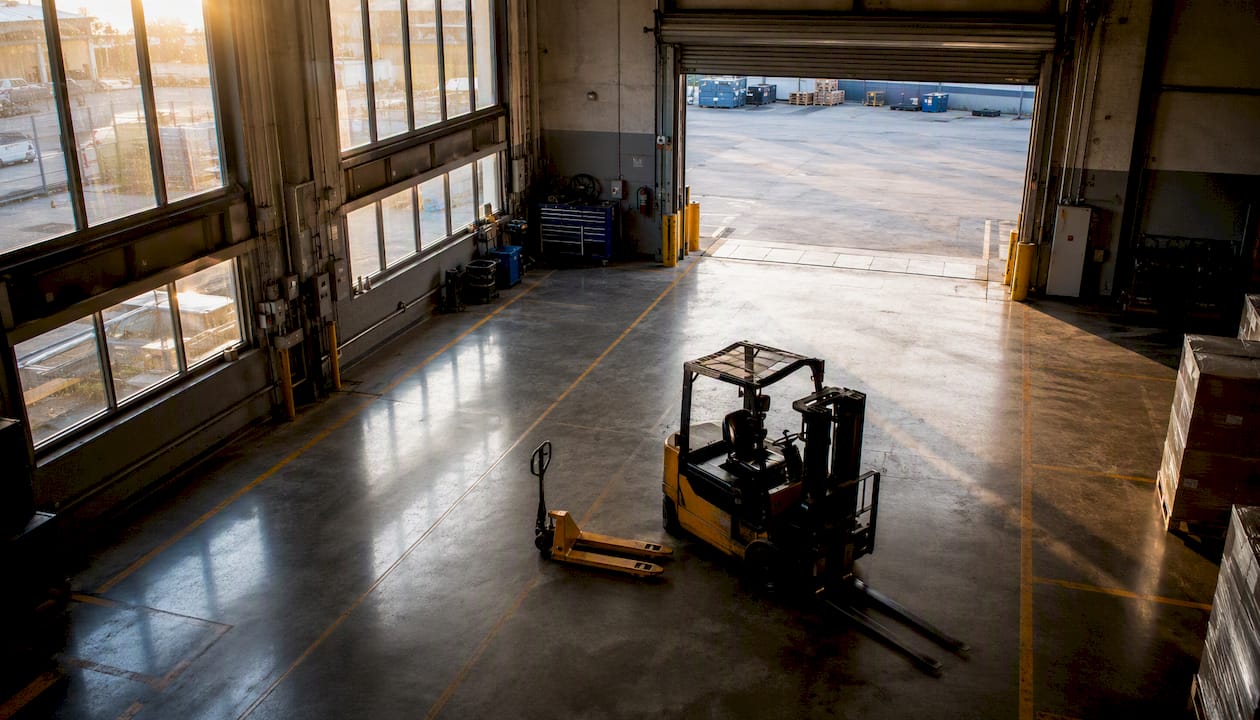
Automation is reshaping throughput assumptions inside MFCs. Exotec’s research on automated storage and retrieval systems shows how robotics let a small footprint handle order volume that would otherwise require several times the floor area under manual picking. That tradeoff, capex for automation versus square footage for storage, is becoming a core underwriting decision rather than a footnote.
Pro Tip: When a tenant proposes automation as part of their build-out, ask who owns the equipment at lease expiration. Tenant-installed AMRs and racking systems left behind can either become a valuable improvement or a costly removal obligation, depending on how the lease handles it.
- Parcel and van networks: grade-level doors, standard power, minimal staging.
- Heavy industrial delivery: reinforced floors, wide door openings, dedicated crew staging, surveyed access routes.
- Automated MFCs: higher power density, AMR/ASRS clearances, WMS integration points built into the shell.
How Should Investors Underwrite Last-Mile Assets?
Rent-per-square-foot comparisons alone mislead deal teams on last-mile assets. The variable that matters is rent-per-square-foot adjusted for trade-area density, since a smaller building in a denser radius can justify a materially higher rate than a larger building further out. Model turnover assumptions against local infill supply constraints rather than metro-wide vacancy averages; true last-mile sites rarely trade on the open market in volume, which keeps renewal leverage with the landlord.
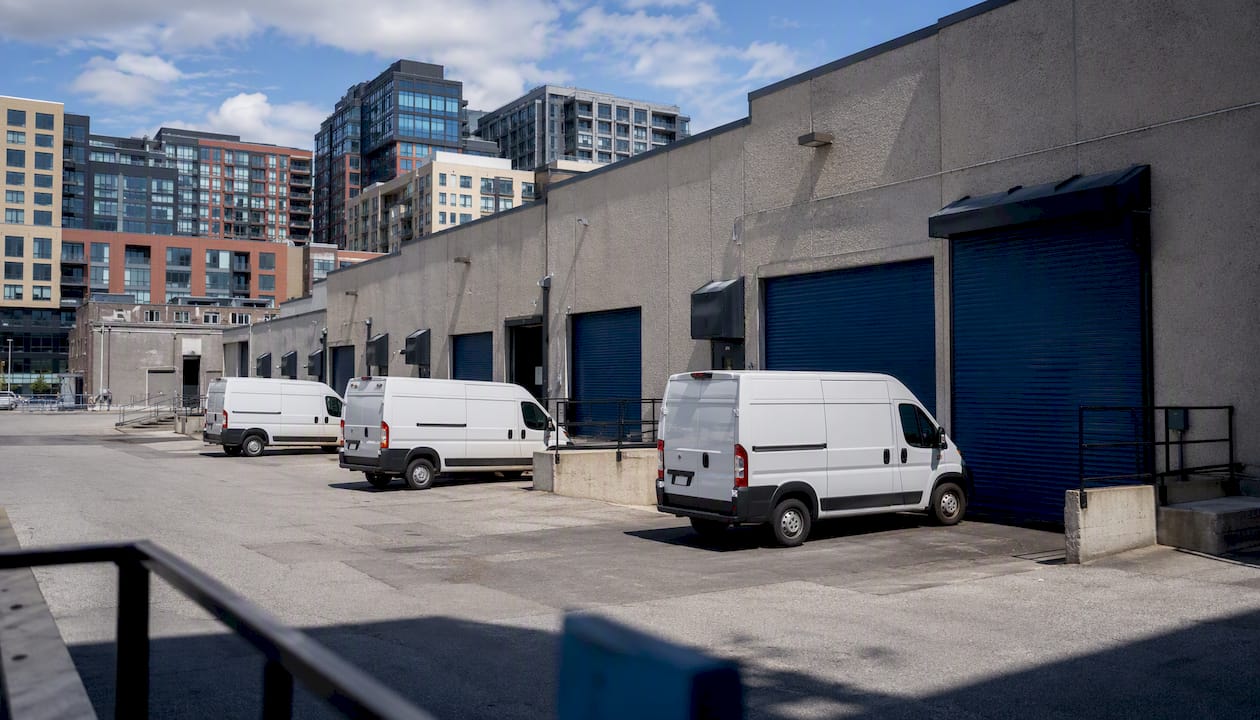
Line items to underwrite separately from a standard industrial pro forma: tenant-requested power upgrades for EV fleets or automation, yard and parking replacement costs, and any tenant improvement allowance tied to racking or conveyor systems that may not transfer to the next tenant. Lease terms for last-mile tenants also skew shorter, often five to seven years instead of ten plus, with turnover clauses tied to delivery volume and operating-hour covenants baked into the lease abstract itself. NNN structures remain standard, but expect more negotiated carve-outs around yard maintenance and snow removal given the vehicle traffic these sites carry.
Pro Tip: Model obsolescence risk explicitly for any building heavily customized around one tenant’s automation or vertical racking. A vacated MFC with embedded ASRS infrastructure can cost more to convert back to generic industrial use than a plain shell ever would.
- Adjust rent comparisons for trade-area density, not raw square footage.
- Separate capex for power and automation from standard tenant improvement budgets.
- Expect shorter lease terms with volume-based turnover clauses as the norm, not the exception.
What Regulatory and ESG Risks Should Investors Watch?
Low-emission zones and curb restrictions are no longer edge cases; the ITF-OECD’s research on urban logistics finds that freight movement accounts for roughly half of local air pollutants in many cities, which is pushing municipalities toward tighter loading windows and vehicle emissions requirements. Community pushback over truck noise and traffic is the other recurring friction point, particularly for sites near residential infill.
Cities are not waiting for federal policy on this. Local permitting for refrigerated or high-power last-mile uses is getting stricter year over year, and investors who assume yesterday’s zoning still applies are underwriting a risk they haven’t priced.
Mitigation is mostly operational: requiring EV or low-emission vehicle commitments from tenants, negotiating off-peak loading windows into the lease, and tracking ESG metrics like CO2 per tonne-kilometer, damage rate, and on-time delivery rate as standard KPIs rather than afterthoughts.
- Confirm current LEZ status and trajectory, not just today’s zoning map.
- Build off-peak loading flexibility into lease covenants before a tenant needs it.
- Track on-time delivery, damage rate, and touches per item as ongoing ESG signals.
What Should Be on a Last-Mile Due-Diligence Checklist?
Site visits for last-mile industrial need a different checklist than a standard bulk warehouse tour. Measure door heights and widths directly rather than trusting the offering memorandum, and walk the yard to confirm turning radii support the tenant’s actual vehicle mix, not just a generic delivery van.
A building that looks perfect on paper can fail on-site diligence in ten minutes if the turning radius doesn’t work for the tenant’s actual truck fleet.
Request routing data, historical delivery volumes, and electronic proof-of-delivery records if the tenant will share them. Lease schedules should spell out operating windows and any curb or staging restrictions the tenant has already negotiated with the municipality.
- Measure door heights, widths, and floor load capacity in person.
- Confirm yard turning radius against the tenant’s actual vehicle fleet, not assumptions.
- Pull routing data, ePOD records, and lease schedules covering operating-hour restrictions.
A Note From Ardor CRE
We place last-mile tenants and advise infill industrial investors across the Charlotte MSA daily, and the pattern above holds in nearly every deal we underwrite. Ardor CRE brings that pattern to your next site tour.
How Ardor CRE Supports Last-Mile Industrial Investors
Ardor CRE is the local alternative to guessing your way through a last-mile deal: we underwrite the site, not just the offering memo. Our team handles site selection, lease negotiation, property valuation, asset repositioning for last-mile conversions, and tenant or landlord representation across the Charlotte MSA.
If you are sizing a loan for an infill acquisition, our DSCR underwriting guide walks through the loan-sizing math investors use to test whether a last-mile deal actually pencils. Reviewing a lease already on the table? Our lease abstract guide flags the operating-hour and yard-rights clauses that matter most for this asset type. Reach out to schedule a site tour or a diagnostic call on a specific last-mile opportunity you are evaluating.
Frequently Asked Questions About Last Mile Industrial
What does “last mile industrial” mean in commercial real estate?
It refers to industrial and flex space positioned to complete the final delivery leg to customers, typically infill or small-bay product favoring grade-level access over deep trailer courts.
Does last mile industrial always trade at a rent premium?
Not automatically. The premium holds only where route density, drive-time proximity, and limited competing infill supply support it; otherwise the asset prices like standard industrial space.
What building specs matter most for last-mile tenants?
Grade-level door ratio, van parking capacity, curb access, and permitted operating hours generally matter more than clear height or dock-door count, except for vertical hub formats.
How is a micro-fulfillment center different from a standard last-mile warehouse?
MFCs use automation like AMRs and ASRS to compress fulfillment into a smaller footprint, letting a fraction of the square footage handle comparable order volume.
What is the biggest underwriting mistake investors make on last-mile assets?
Comparing rent per square foot without adjusting for trade-area density, which understates the value of a smaller, better-located building against a larger one further out.
Sources
- U.S. Census Bureau — E‑commerce statistics
- Urban logistics hubs — ITF/OECD
- Everything to know about micro‑fulfillment automation — Exotec
- Micro‑fulfillment centers — Surgere (blog)
- What is Last‑Mile Industrial? — Smallbay