
A ground lease is a long-term rental of land, typically 50 to 99 years, where the tenant builds and owns the improvements while the landowner keeps the underlying fee ownership. The tenant gets development rights without buying the dirt underneath; the landlord gets steady rent plus everything built on the site once the lease ends. The trade-off comes down to control now versus ownership later, and almost every dispute in these deals traces back to how the lease handles that split.
TL;DR:
- Rent reset clauses can significantly impact long-term economics, especially if valuing land at highest-and-best-use, which can lead to dramatic rent increases.
- Ground lease terms longer than 50 years are essential for financing large development projects, with shorter durations often limiting loan options.
- Well-drafted leases specify appraisal methods, caps, and floors on resets to prevent disputes and ensure predictable rent adjustments.
- Lender protections require recordation, cure rights, and lease term thresholds; leases under 20 years often cannot meet financing criteria.
- Due diligence must verify title, zoning, utilities, environmental conditions, and model scenarios to prevent surprises and ensure lease viability.
Table of Contents
- What Is a Ground Lease? Legal Interests and Common Uses
- Key Components of a Ground Lease Agreement
- Advantages and Disadvantages for Landlords and Tenants
- Rent, Valuation, and the Rent-Reset Problem
- Financing and Lender Protections for Leasehold and Fee Interests
- Due-Diligence Checklist Before You Sign a Ground Lease
- How Ardor CRE Approaches Ground-Lease Issues in Office and Medical Projects
- When a Ground Lease Beats a Purchase
- Sources
- FAQ
What Is a Ground Lease? Legal Interests and Common Uses
Two separate legal interests exist on the same parcel in a ground lease. The landowner holds the leased-fee interest, meaning ownership of the land subject to the tenant’s lease. The tenant holds the leasehold interest, which typically includes the right to build, occupy, and (during the term) own the structure outright. That split matters because financing, insurance, and even property tax treatment often follow the leasehold, not the fee.
Ground leases come in a few common structures:
- True net ground leases, where the tenant pays all taxes, insurance, and maintenance in addition to rent
- Divisible or multi-parcel leases, used when a large site is subdivided among several ground tenants
- Renewable long-term leases, often written for 99 years with renewal options built in from the start
Institutional landowners (universities, municipalities, religious organizations) use ground leases to generate income without giving up land permanently. Developers and operators in retail, multifamily, office, and healthcare use them to secure well-located sites where buying outright is too expensive or unavailable. A hospital system expanding a medical campus, for instance, might ground lease adjacent land rather than negotiate a fee purchase that could take years.
Key Components of a Ground Lease Agreement
Four provisions decide whether a ground lease works for both sides over 50 or more years: term, rent structure, reset mechanics, and reversion.
Term length has to match the project’s economic life. A tenant building a $30 million medical office building needs a term long enough to depreciate the asset and satisfy a lender’s amortization schedule. A 20-year ground lease under a building meant to last 60 years is a financing problem waiting to happen.
Rent typically takes one of these forms:
- Fixed rent for the full term, rare beyond short deals
- Scheduled step increases, agreed at signing
- CPI or index-based escalations, tying rent to inflation
- Market resets, where rent is reappraised at set intervals, often every 10 to 15 years
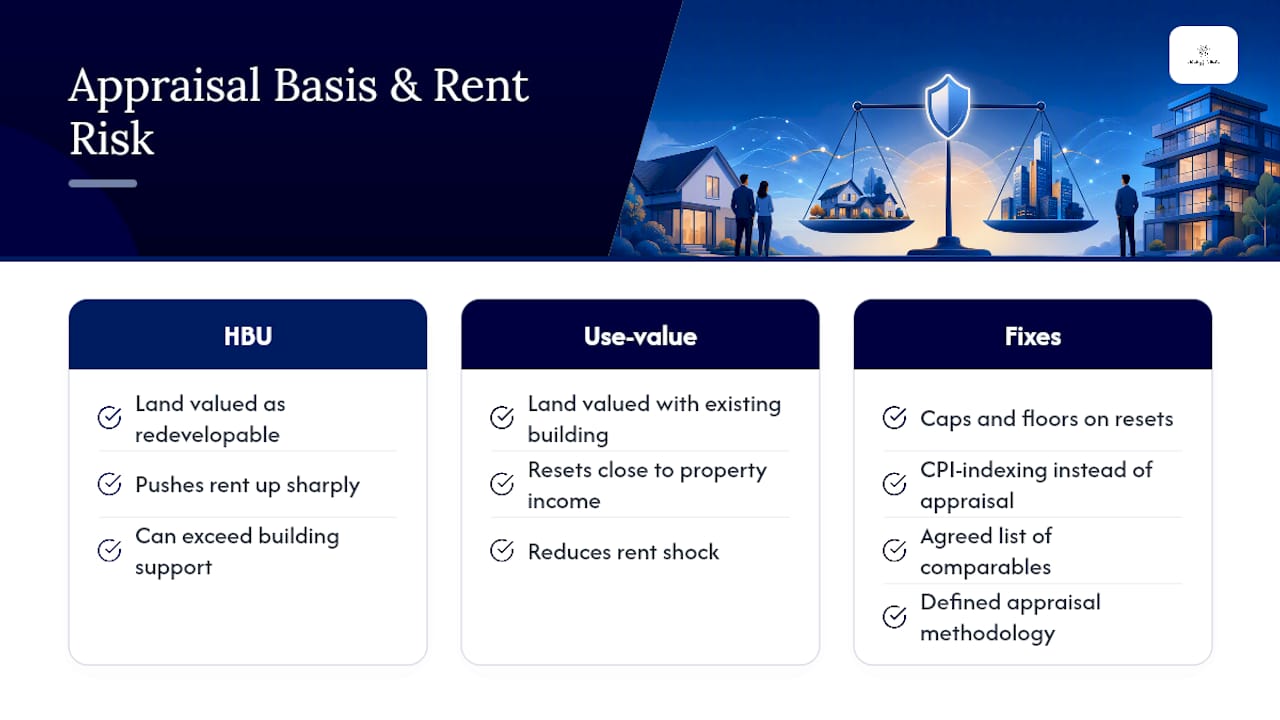
Reset language is where most fights happen. Some leases value the reset against the land’s highest-and-best-use, which can spike rent dramatically; others use the actual use-value based on current improvements. Well-drafted leases spell out arbitration or appraisal procedures in advance, not after a dispute starts. At the end of the term, most ground leases include a reversion clause: the improvements pass to the landowner, often with no compensation to the tenant, which is exactly why term length deserves so much scrutiny before signing.
Advantages and Disadvantages for Landlords and Tenants
Ground leases shift risk and reward in specific, predictable directions depending on how the deal is drafted.
- Landlords retain ownership and capture long-term upside. They collect steady rent for decades and eventually recover the land with a building on it, often worth far more than the vacant parcel was. The tradeoff: restrictive lease terms can limit the landlord’s ability to refinance or sell the fee interest freely, and many leases push maintenance and tax obligations onto the tenant, which sounds good until a dispute over deferred repairs surfaces.
- Tenants avoid a large upfront land purchase, freeing capital for construction and operations. Ground rent is also fully deductible, unlike land cost, which cannot be depreciated. The risk sits at the far end of the term: reversion means losing the building, and a poorly capped rent reset midway through the lease can quietly erode net operating income for years before anyone renegotiates.
- Drafting choices tilt the economics one way or the other. A landlord favoring rent growth will push for highest-and-best-use resets and short reset intervals. A tenant favoring stability will push for use-value language, rent caps, and long fixed-rate periods. Almost every economic term in the lease is negotiable at signing, far less so once the ink dries.
Rent, Valuation, and the Rent-Reset Problem
The single clause most likely to make or break a ground lease’s economics is the reset provision, and it comes down to one question: what is being appraised? Valuing the land at its highest-and-best-use, meaning what it could earn if redeveloped from scratch, tends to push rent up sharply, sometimes to levels the existing improvements cannot support. Valuing it at use-value, meaning what the land is worth given the building already on it, keeps resets closer to what the property actually generates. The Appraisal Institute has flagged this distinction as one of the most consequential and most frequently mishandled parts of ground lease drafting.
Tenants and landlords can avoid ugly surprises by negotiating specifics upfront: caps and floors on any reset increase, CPI-indexing instead of open market appraisal, a list of agreed-upon comparable properties, or a defined appraisal methodology that names the valuation basis explicitly. Vague language like “fair market rent” without further definition is an invitation to dispute.
Pro Tip: Never leave “market value” undefined in a reset clause. Specify whether the appraiser values the land as vacant or as improved, because that single word choice can shift rent, and therefore debt service coverage, by a wide margin.
Financing and Lender Protections for Leasehold and Fee Interests
Lenders treat leasehold mortgages very differently from fee mortgages, and that difference shapes what’s negotiable in a ground lease. A leasehold mortgage is secured only by the tenant’s interest in the lease and the improvements, not the land itself, which makes lenders more cautious and more demanding about lease terms.
Lenders financing a leasehold typically require:
- The right to receive notice of any tenant default, plus a reasonable cure period before the lease can be terminated
- A subordination, non-disturbance, and attornment agreement (SNDA) protecting the lender’s collateral position
- The ability to obtain a new lease if the original tenant defaults and the lease is terminated
- Recorded lease documentation and a signed estoppel certificate confirming lease terms at closing
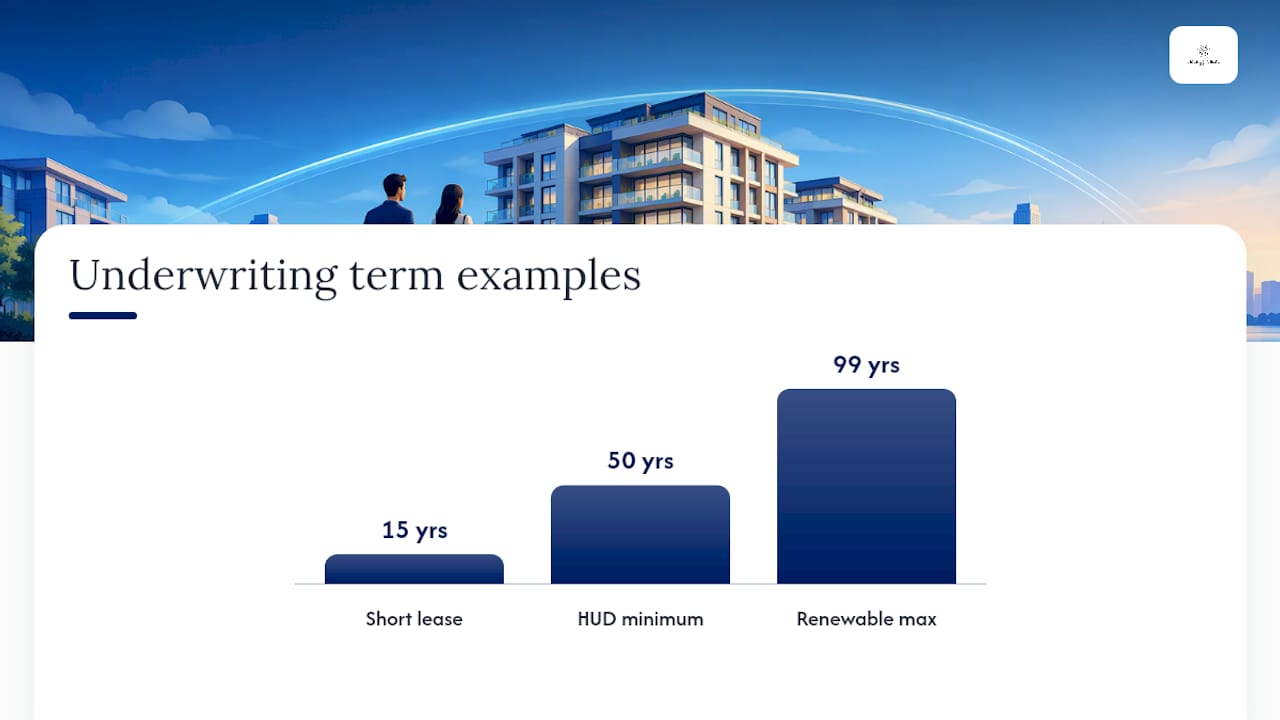
HUD’s underwriting guidance sets minimum remaining-term thresholds for insured mortgages, with examples ranging from 50 years up to 99-year renewable structures depending on the program, along with specific documentation and recording requirements. A lease with only 15 years left on the clock, no matter how attractive the rent, often can’t clear these underwriting hurdles at all. This is the same term-alignment issue that trips up medical office buyers weighing a purchase against a ground lease or a straight leasehold: the shorter the remaining term, the fewer financing options survive contact with a lender’s credit committee.
Due-Diligence Checklist Before You Sign a Ground Lease
Work through these steps in order before committing to a ground lease, whether you’re the landowner or the prospective tenant.
- Confirm title, survey, and zoning. Verify there are no competing claims on the parcel and that the intended use is permitted outright, not through a variance that could be challenged later.
- Check utilities, access, and environmental condition. A landlocked parcel or an unresolved Phase II environmental report can derail financing months into the deal.
- Model construction costs against stabilized net operating income. Run the numbers as they’d actually perform once occupied, not on optimistic day-one assumptions.
- Stress-test rent under every escalation and reset scenario in the lease. If a CPI spike or a market reset would break debt service coverage, that’s the moment to renegotiate, not after signing.
- Confirm the lease term exceeds the financing horizon, with enough cushion for a refinance or sale before the term runs short.
- Secure lender consents, insurance requirements, recording, and a signed estoppel certificate before closing, and consider a lease abstract to pull every material clause into one document your lender and counsel can review quickly.
How Ardor CRE Approaches Ground-Lease Issues in Office and Medical Projects
Ground-lease questions come up constantly in medical office and general office transactions across the Charlotte MSA, usually when a practice or investor is weighing a purchase against leasing and needs to know how term length interacts with debt service coverage ratio (DSCR) underwriting. A short remaining term can quietly shrink loan proceeds even when in-place rent looks strong on paper.
Advisors work through lease abstraction, valuation modeling, and both tenant and landlord representation to pressure-test these deals before they close. On a recent medical office assignment, running the ground rent reset language against three appraisal scenarios changed the projected debt service coverage ratio enough to reshape the financing structure entirely.
If you’re weighing a ground lease against a purchase for an office or medical-office asset, Ardor CRE’s advisory services can model the scenarios before you commit to either path.
When a Ground Lease Beats a Purchase
Ground leases make the most sense for tenants who need a long-term site (30 years or more), can tolerate reversion at term end, and want capital freed up for construction rather than land acquisition. Purchase usually wins when the remaining lease term is short, when reset language is vague or unfavorable, or when lender protections like SNDAs and cure rights are missing. Read the reset clause first. If nobody can explain how rent gets reappraised in year 20, that is the deal-breaker, not a detail to fix later.
— Jim
Sources
For deeper reading, the UNC School of Government’s ground lease primer covers legal fundamentals, HUD’s underwriting guidance details minimum-term requirements, the Appraisal Institute’s analysis breaks down rent-reset valuation, and Holland & Knight’s legal deep dive walks through drafting and financing issues in detail.
- Student Corner: On Borrowed Ground: A Ground Lease Primer
- HUD: 4465.1 CHG (Underwriting/Leasehold guidance)
- Appraisal Institute: Rent-reset and valuation issues
FAQ
Why Would Anyone Sign a Ground Lease?
Ground leases let tenants develop and occupy a site without the upfront cost of buying land, freeing capital for construction. Landowners use them to generate steady long-term income while keeping the fee interest and eventually recovering a built, income-producing asset at reversion.
What Are the Disadvantages of a Ground Lease?
For tenants, the biggest risks are reversion of the improvements at term end and rent-reset clauses that can spike costs if valuation assumptions favor redevelopment potential over actual use, as explained in How a Commercial Property Sale Differs from Residential. For landlords, restrictive lease terms can limit refinancing or sale of the fee interest, and maintenance obligations sometimes shift unfavorably depending on the lease structure.
Is a 10-Year Ground Lease Considered Long-Term?
No. Most ground leases run 50 to 99 years to match the economic life of the improvements and satisfy lender term requirements. A 10-year term is closer to a standard commercial lease and typically won’t support the financing or amortization schedule a ground lease structure is built for.
Who Owns the Property in a Ground Lease?
The landowner holds the leased-fee interest in the land itself, while the tenant holds the leasehold interest and generally owns the improvements built on it during the lease term. At reversion, ownership of those improvements typically passes to the landowner as spelled out in the lease.