
Dock-high loading raises the building floor to match a trailer bed, typically for fast, palletized freight handled by forklifts, while grade-level loading keeps the floor flush with the yard for drive-in trucks and oversized or infrequent deliveries. OSHA sets the safety baseline for both. Industry advisors recommend choosing dock-high for high-volume distribution and grade-level when truck court depth or load type rules it out.
TL;DR:
- Dock-high loading is ideal for high-volume freight operations using 53-foot trailers and forklifts, offering faster cycle times and weather protection.
- Grade-level loading suits small warehouses, retail back-ends, or sites with limited truck court depth, providing flexibility and lower upfront costs.
- Proper safety measures, including restraints and regular equipment maintenance, are essential to prevent trailer creep and forklift accidents at either dock type.
- Site constraints like truck maneuvering space and vehicle types should guide whether to install permanent docks or use portable yard ramps for flexibility.
- Negotiating loading infrastructure costs in lease or purchase agreements and testing throughput with temporary ramps helps ensure the loading setup matches operational needs.
Table of Contents
- Dock-high vs grade-level: the quick comparison
- What counts as dock-high, and what equipment it needs
- What grade-level loading looks like and when it fits
- Weighing throughput, cost, and site fit
- Safety rules you can’t skip at either dock type
- A decision checklist for choosing your dock configuration
- How dock type affects leasing, purchase price, and tenant improvements
- Where ArdorCRE fits when you’re sizing up an industrial site
- Sources
- FAQ
Dock-high vs grade-level: the quick comparison
Dock-high docks sit elevated, usually matched to a trailer bed, and rely on levelers to bridge the gap. Grade-level bays sit flush with the ground and let a vehicle pull straight in.
- Dock-high: built for 53-foot trailers and palletized freight moved by forklift or pallet jack.
- Grade-level: built for straight trucks, box vans, oversized loads, or forklift-free hand unloading.
- Equipment at dock-high: levelers, seals or shelters, vehicle restraints, bumpers.
- Equipment at grade-level: yard ramps, dockboards, sometimes none at all for a simple drive-in bay.
Dock-high wins on throughput and protects product from weather during transfer. Grade-level wins on flexibility and upfront cost, since it skips the structural work a raised dock requires. The tradeoff comes down to what you move, how often, and what your site allows.
What counts as dock-high, and what equipment it needs
Dock-high loading is built around matching the building’s floor level to a trailer bed so forklifts can roll straight across. Dock faces are commonly specified in a range centered near 48 inches above the finished floor, which lines up with the deck height of most trailers used in freight distribution. The leveler then absorbs the remaining gap and any variance between trailer types.
A functioning dock-high setup includes:
- A mechanical, hydraulic, or air-powered dock leveler to bridge the trailer-to-dock gap.
- A seal or shelter to block weather and pests during loading.
- A vehicle restraint or wheel chocks to stop trailer creep while forklifts are working inside.
Distribution centers, large palletized operations, and anything running frequent trailer turns tend to standardize on dock-high because it lets forklift traffic move freight without ramps or lift gates.
Pro Tip: Confirm your carrier fleet’s trailer bed heights before finalizing a dock height spec, since mismatched decks slow down leveler engagement and create trip hazards.
What grade-level loading looks like and when it fits
Grade-level loading keeps the building floor flush with the yard, so a truck or straight van simply pulls in and parks for loading. There is no raised dock to engineer, no leveler to maintain, and no structural pit to pour.
Common access methods include a direct drive-in bay, a yard ramp for occasional trailer access, or a dockboard bridging a small gap. Facility profiles that typically lean grade-level include:
- Small warehouses and light manufacturing spaces with low trailer volume.
- Retail back-of-house areas receiving box trucks rather than 53-foot trailers.
- Sites with a shallow or constrained truck court that can’t support dock maneuvering.
Grade-level also makes sense when the building sits on a slab without the clearance for a dock pit, or when the tenant mix changes often enough that a fixed dock height would mismatch future users. For buildings with uncertain future tenancy, that flexibility often outweighs the throughput advantage of a fixed dock.
Weighing throughput, cost, and site fit
Choosing between the two comes down to three measurable factors.
- Throughput: Dock-high loading cuts cycle time because forklifts move freight directly across a leveler, with no ramp grade slowing travel. Grade-level loading works fine at lower volumes but adds time per load when a yard ramp or dockboard is involved.
- Capital and maintenance cost: A permanent dock requires a raised slab, a leveler, and ongoing leveler and seal maintenance. A yard ramp or drive-in bay costs less upfront and carries lower long-term upkeep, though portable ramps still need periodic inspection.
- Site constraints and vehicle fit: Truck court depth, turning radius, and approach slope all affect whether a dock-high layout is even feasible. A 53-foot trailer needs more maneuvering room than a straight truck, so a tight yard often pushes the decision toward grade-level by default rather than preference.
Pro Tip: Before committing to permanent dock construction, stage a temporary yard ramp and track dwell times and forklift moves for a few weeks. The data will tell you whether the throughput gain justifies the build cost.
Safety rules you can’t skip at either dock type
Trailer creep during loading is one of the most preventable hazards in freight handling, and OSHA has addressed it directly. Under 29 CFR 1910.178(k)(1) and (m)(7), mechanical vehicle restraints are an accepted alternative to wheel chocks when they provide equivalent protection, and that equipment has to be installed, maintained, and used according to the manufacturer’s instructions. Damaged restraint equipment must come out of service immediately.
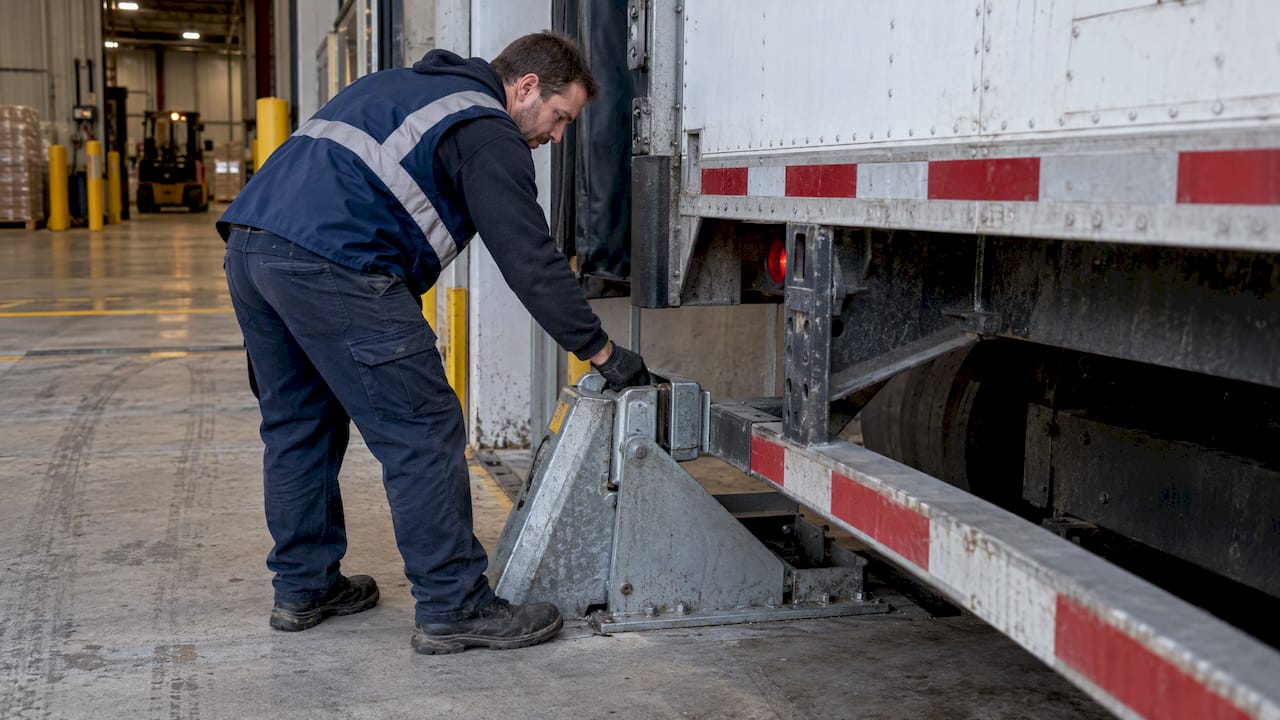
OSHA’s standard interpretation letters have repeatedly flagged trailer pull-away during forklift loading as a cause of serious injury, which is why restraints or chocks are treated as mandatory, not optional, at both dock-high and grade-level bays.
Practical safety measures include:
- Vehicle restraints or wheel chocks engaged before any forklift enters the trailer.
- Scheduled dock leveler inspection and maintenance to prevent sudden failure under load.
- Documented operator training on loading and unloading procedures.
Forklift overturns remain a leading cause of fatalities in material handling work, which is why OSHA’s powered industrial truck guidance puts such weight on training and restraint use during dock operations.
A decision checklist for choosing your dock configuration
Work through these questions before specifying or leasing a space:
- What vehicle types make up your fleet: 53-foot trailers, straight trucks, or a mix?
- What is your expected daily throughput in truck turns and forklift moves?
- How much truck court depth and turning radius does the site actually offer?
- What clear height does the building provide, and does it support your racking plan?
- What capital budget exists for dock construction, leveler installation, or a yard ramp?
- What dock-related terms should go into the tenant improvement allowance negotiation?
Once you have answers, measure the existing truck court against your largest vehicle, pilot a yard ramp if you’re unsure about volume, and bring in a structural review before committing to permanent dock construction.
How dock type affects leasing, purchase price, and tenant improvements
Loading infrastructure is a negotiating point, not a fixed cost. When a space needs dock upgrades, that scope and cost-sharing should be spelled out in the letter of intent, not left to chance later. A landlord’s willingness to fund the work through a tenant improvement allowance or a reduced rent period changes the total economics of the deal. Buyers should price dock retrofits into their offer using the same financing logic covered in our DSCR loan sizing guide, and tenants should confirm loading responsibilities are documented correctly in the lease abstract.
— Jim
Where ArdorCRE fits when you’re sizing up an industrial site
Finding the right industrial building means matching dock configuration to your actual freight flow, not just taking what’s on the market. Commercial real estate advisors can work with buyers and tenants to evaluate sites, estimate dock retrofit costs, and negotiate TIA or purchase terms that reflect what the loading infrastructure actually needs.

- Site evaluation for dock-high, grade-level, or hybrid loading needs.
- Lease and purchase negotiation support, including TIA scoping for dock upgrades.
- Valuation and DCF modeling to confirm a retrofit pencils out before you commit.
Reach out through our services page to start a property review or get a cost estimate on dock upgrades for a space you’re considering.
FAQ
What is the difference between a grade-level door and a dock-high door?
A grade-level door sits flush with the ground so trucks drive straight in, while a dock-high door is raised to meet a trailer bed for forklift access across a leveler. The choice depends on vehicle type, freight volume, and available truck court space.
What is considered dock high?
Dock-high generally refers to a loading dock built around a height that matches a trailer bed, commonly specified near 48 inches above the finished floor. A leveler bridges the remaining gap between the dock face and the trailer.
What is the average dock height in a warehouse?
Many warehouses specify dock height near 48 inches, since that aligns with the deck height of most trailers used in freight distribution. Facilities should confirm this against their own carrier fleet before finalizing a spec, since trailer bed heights vary.
What is the typical dock height for a 53-foot trailer?
A 53-foot trailer typically docks at the same height range used for most dock-high facilities, generally near 48 inches, with the leveler accounting for variance in deck height between trailers. Specifying adequate leveler travel matters more than chasing an exact number, since trailer heights are never perfectly uniform.