
The clauses that do the most damage to a dental practice are personal guarantees, assignment restrictions, and vague tenant improvement allowance language, followed closely by rent escalation formulas and CAM caps. If you have a signed letter of intent or a draft lease in hand, do not sign anything further until a tenant representative or a healthcare-focused real estate attorney reviews it clause by clause. A bad lease is far more expensive to escape than it is to negotiate up front.
TL;DR:
- Personal guarantees should be limited to a few years or include a burn-off clause to avoid long-term liability risks; always review assignment restrictions carefully.
- Lease terms must specifically authorize dental operations, with options like ten-year initial terms and renewal clauses that safeguard practice goodwill and meet financing requirements.
- Triple net leases can significantly increase occupancy costs beyond the base rent due to un capped taxes, insurance, and CAM charges; negotiating CAM caps and audit rights is advisable.
- Rent escalation clauses at 3% annually can compound notably over ten years, often surpassing CPI-based increases and raising total occupancy costs by tens of thousands of dollars.
- Tenant improvement allowances rarely cover full build-out costs, making early negotiation of TIA amounts essential to protect cash reserves and avoid costly project gaps.
Table of Contents
- What Dental Office Lease Terms Should You Watch Most Closely?
- How Do Rent Escalations and TIAs Affect Your Five-Year Cost?
- Guarantees, Assignment, and Protecting a Future Sale
- Building Out a Dental Suite Without Losing Money on Rent
- What’s the Right Timeline for Negotiating a Dental Lease?
- Common Termination Clauses and Penalties
- Insurance Requirements and Responsibilities Between Tenant and Landlord
- Maintenance and Repair Obligations Delineation
- Parking Rights and Provisions
- Dispute Resolution Mechanisms and Governing Law
- Impact of Local Zoning Laws on Dental Office Use
- A Tenant Rep’s Take on What Actually Gets Missed
- How Ardorcre Helps You Negotiate a Dental Lease
- Sources
- FAQ
What Dental Office Lease Terms Should You Watch Most Closely?
Every commercial lease reads like boilerplate until you notice the clause that was written for a retail tenant, not a dental practice. Dental office lease terms carry more operational and financial risk than a typical office or retail agreement because the space itself is expensive to build and difficult to relocate once plumbing, suction lines, and lead-lined walls are in place.
Here is what actually moves the needle in a dental lease:
- Permitted use. The lease should specifically authorize dental operations, including diagnostic imaging, sterilization procedures, and hazardous waste handling. A generic “medical office use” clause can leave you exposed if a landlord later objects to X-ray equipment or amalgam disposal.
- Term and renewal options. Ten-year initial terms paired with two five-year renewal options are common in dental leases, and that structure matters for two reasons: it protects the goodwill you build at a location, and lenders financing a practice sale often require a minimum remaining term on the lease.
- Lease type. Gross leases bundle taxes, insurance, and maintenance into one rent figure. Modified gross splits some of those costs between landlord and tenant. Triple net (NNN) leases pass taxes, insurance, and common area maintenance directly to you, which can look like a lower base rent while carrying a much higher total occupancy cost.
- CAM mechanics. Ask for a cap on annual CAM increases and the right to audit the landlord’s expense allocations every year.
- Tenant improvement allowance (TIA). This is the single biggest negotiable dollar figure in a dental lease, and it deserves its own conversation, which comes next.
- Maintenance, signage, exclusivity, and default provisions. Each of these determines who pays when a rooftop HVAC unit fails, whether your practice name appears on the building sign, whether a competing dentist can lease space down the hall, and what triggers a default notice.
How Do Rent Escalations and TIAs Affect Your Five-Year Cost?
A 3% annual escalator sounds harmless on a term sheet. Over a ten-year lease, it compounds into a materially higher rent bill than a flat CPI-indexed increase in most years, since CPI has recently run below 3% annually. Run both scenarios against your actual base rent before you sign, because the difference between a fixed percentage escalator and a CPI-based one can shift your occupancy cost by tens of thousands of dollars over a decade.
Facility costs should sit at 5 to 7% of collections for a healthy practice. Poor lease terms, stacked escalators, and uncapped CAM charges can push that figure to 10% or higher, which eats directly into the margin you’d otherwise reinvest in equipment or staff.
Build-out costs vary enormously depending on the condition of the space you’re leasing:
| Space condition | Typical build-out cost | Typical TIA offered |
|---|---|---|
| Vanilla box (raw shell) | $200 to $300 per square foot | $20 to $350 per square foot |
| Second-generation dental space | $50 to $100 per square foot | $40 to $100+ per square foot in competitive markets |
| Turnkey sublease | Minimal to none | Rarely offered; not usually needed |
TIAs commonly fall short of covering a full dental build-out, which can run $150 to $350 per square foot once operatory plumbing, imaging rooms, and specialty electrical are factored in. That gap is exactly why negotiating the TIA figure during the LOI stage, rather than after you’ve fallen in love with a space, protects your cash reserves.
Guarantees, Assignment, and Protecting a Future Sale
A personal guarantee ties your home, savings, and credit to the lease, often for its full term. Advisors recommend limiting guarantees to two or three years, or negotiating a burn-off clause that releases you from personal liability once you’ve established a payment track record. Good-guy guarantees, which release you upon proper notice and vacating the space, are another middle-ground option worth requesting.
Assignment language matters even more if you ever plan to sell your practice. A buyer typically needs the existing lease to make the deal work, which hands the landlord unusual leverage at exactly the wrong moment. Negotiate for:
- The right to assign the lease to a qualified buyer without unreasonable landlord delay
- Objective, defined financial criteria for what makes a buyer “qualified”
- A release of your personal guarantee upon a completed, approved assignment
Pro Tip: Ask your attorney to define “unreasonably withheld” with specific criteria, like minimum net worth or years in practice, rather than leaving landlord approval open to subjective judgment.
Building Out a Dental Suite Without Losing Money on Rent
Dental space carries build requirements a standard office tenant never touches. A standard commercial lease usually doesn’t address hazardous waste disposal or X-ray shielding compliance, so those specifics need to be written into your lease or an attached exhibit, not assumed.
Items to confirm in writing before you sign:
- Operatory plumbing, compressed air lines, and vacuum suction systems
- Lead-lined walls or shielding for imaging rooms
- Hazardous waste and amalgam disposal responsibilities
- Electrical service upgrades and dedicated HVAC zoning for equipment loads
Define who pays for each item using detailed exhibits and written acceptance criteria, not verbal promises. Also negotiate free rent or a phased commencement date that starts your rent clock only after your build-out is substantially complete, since construction delays are common and you shouldn’t pay rent on a space you can’t yet use.
What’s the Right Timeline for Negotiating a Dental Lease?
- Start three to six months out for a new lease, twelve months or more before renewal. Term sheets and LOIs are the standard tool for locking in fundamentals early, before the landlord’s attorney drafts a 40-page lease around terms you never agreed to.
- Use the LOI to fix your economics. Base rent, TIA amount, escalation method, renewal options, and basic assignment rights should all be settled before full lease drafting begins.
- Rank your priorities before you negotiate. TIA size, assignment flexibility, guarantee limits, escalation caps, and CAM audit rights rarely all get conceded at once, so know which two or three matter most to your practice.
- Trade concessions strategically. If a landlord won’t budge on base rent, push for free rent during build-out, a larger TIA, or a hard cap on CAM increases instead.
- Assemble the right team. A tenant representative who understands dental space, a contractor who can estimate build-out costs accurately, and a healthcare-capable attorney to draft final lease language.
Pro Tip: Never let a landlord’s broker draft your LOI. Have your own representative write it so the language reflects your priorities from the first offer, not theirs.
Common Termination Clauses and Penalties
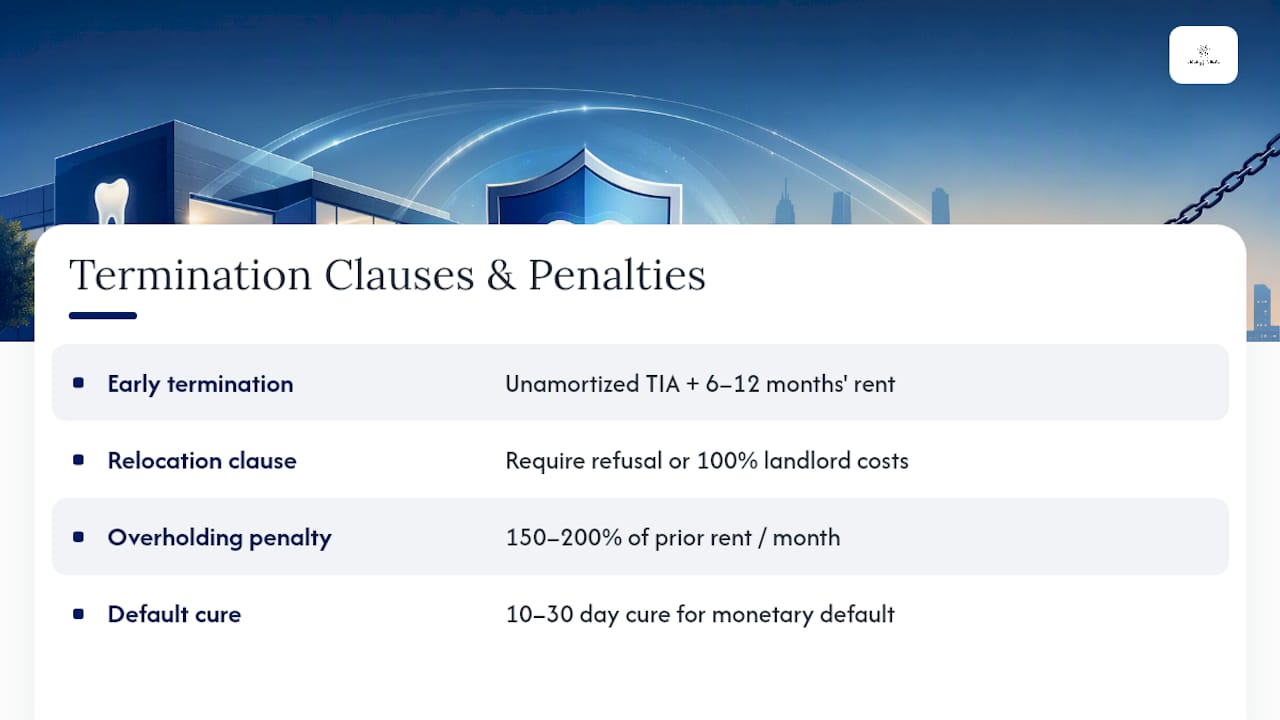
Most dental leases include an early termination clause that lets either party exit under specific conditions, but the penalties attached vary widely. A common structure requires payment of unamortized TIA costs plus several months of remaining rent, sometimes structured as a lump sum equal to six to twelve months of base rent.
Watch closely for relocation clauses, which let a landlord move you to a different space in the building or complex, often with minimal notice. For a dental practice, relocation can mean rebuilding operatories from scratch, which makes this clause far more dangerous than it looks buried on page 20. Negotiate the right to refuse a relocation that doesn’t match your existing build-out, or require the landlord to cover 100% of relocation costs if it’s invoked.
Also check for overholding penalties, which apply if you stay past your lease expiration without a signed renewal. These often jump to 150% or 200% of your prior rent for every month you remain, which can happen accidentally if renewal paperwork stalls. Build renewal negotiations into your calendar well before the deadline so you never fall into an overholding period by default.
Default clauses should specify a real cure period, typically ten to thirty days for a monetary default, before the landlord can accelerate rent or terminate. Vague or one-sided default language is one of the most common sources of landlord-tenant litigation, since commercial leases are governed by contract law rather than residential tenant protections, leaving little room for a court to interpret ambiguity in your favor.
Insurance Requirements and Responsibilities Between Tenant and Landlord
Landlords almost always require tenants to carry general liability insurance, often with minimums in the $1 million to $2 million per occurrence range, plus property insurance covering your equipment, fixtures, and improvements. Dental practices should also confirm whether professional liability and pollution or environmental coverage are required, given the hazardous materials involved in daily operations.
The landlord typically insures the building’s structure and common areas, while the tenant insures the contents and any improvements paid for out of pocket, even when a TIA covered part of the buildout. Read the certificate of insurance requirements closely. Many leases require the landlord be named as an additional insured, and missing that requirement can technically put you in default even if your coverage is otherwise adequate.
Confirm what happens if the building itself is underinsured or if a claim triggers a dispute between your carrier and the landlord’s carrier over responsibility. This is rarely spelled out clearly in a standard template lease, which is exactly why dental-specific review matters here as much as anywhere else in the document.
Maintenance and Repair Obligations Delineation
Ambiguity in maintenance language causes more landlord-tenant disputes than almost any other lease clause. In a gross lease, the landlord typically handles structural repairs, roof, and major systems, while a triple net lease can push far more of that burden onto the tenant, including HVAC repair and replacement inside the suite.
Get specific about which HVAC units serve your suite versus common systems, who pays for compressor failure versus routine filter changes, and what happens if a specialty system tied to your dental equipment (like a dedicated compressor for suction lines) breaks down. A property management perspective on maintenance responsibilities makes clear that these lines are often blurred in template leases and only get resolved cleanly when spelled out in a maintenance responsibility matrix attached as a lease exhibit.
Push for a written matrix, item by item, rather than a single paragraph that says “tenant shall maintain the premises in good condition.” That phrase alone has triggered disputes over everything from plumbing backups to failed lighting ballasts.
Parking Rights and Provisions
Parking rarely gets attention during lease negotiation, and it should. Dental practices depend on patient volume, and a shortage of visible, accessible parking directly affects new patient acquisition and existing patient retention.
Confirm the number of reserved or designated spaces in writing, not just a verbal assurance that “parking is available.” Multi-tenant buildings and shopping centers sometimes lease the same spaces to more than one tenant informally, and without a specific allocation in your lease, you have no recourse if a neighboring tenant’s staff or customers fill the lot before your first patient arrives.
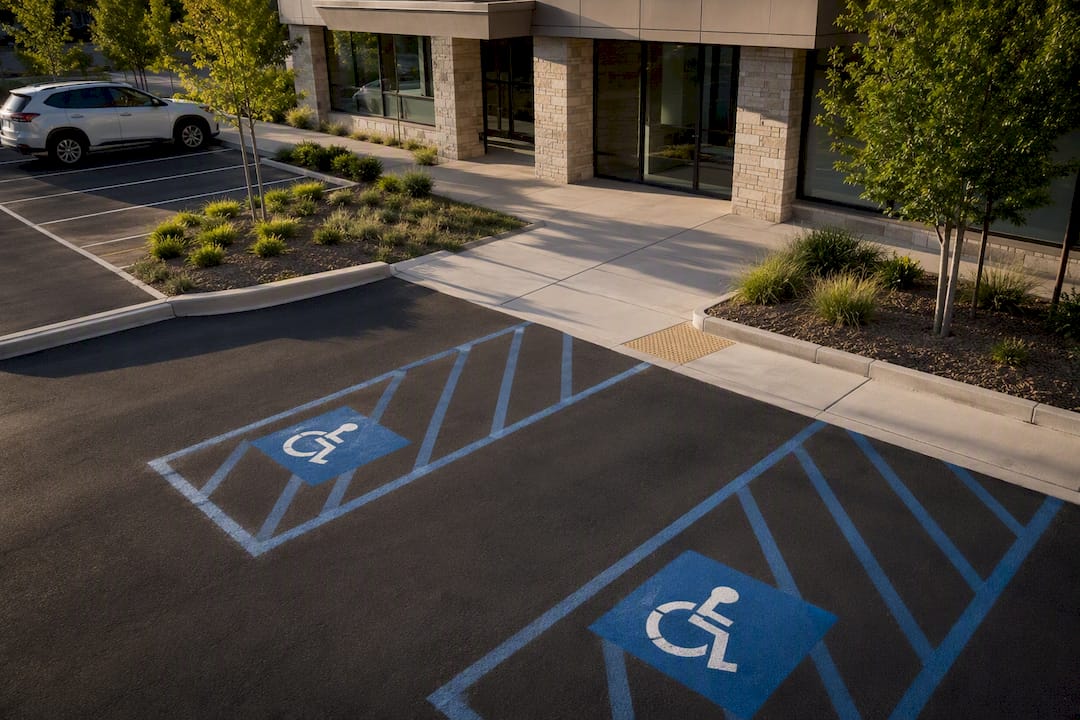
Also verify ADA-compliant spaces are counted separately and located near your entrance, since dental patients often include elderly or mobility-limited individuals. If the property adds tenants later, ask for a clause protecting your allocated spaces from renegotiation or reduction.
Dispute Resolution Mechanisms and Governing Law
Most commercial leases specify a dispute resolution method up front, typically arbitration, mediation, or litigation in the courts of the state where the property sits. Arbitration clauses can speed up resolution and reduce legal costs compared to full litigation, but they also usually waive your right to a jury trial and can limit appeal options.
Check which state’s law governs the lease and where any dispute must be filed. For a multi-state landlord, this could mean litigating hundreds of miles from your practice if the clause isn’t negotiated to specify your local jurisdiction. That detail matters more than it seems on a first read, since travel and unfamiliar local counsel both add cost to any dispute.
Mediation clauses that require a good-faith attempt to resolve disputes before litigation or arbitration begins can save both parties time and legal fees, and are worth requesting if the draft lease doesn’t already include one.
Impact of Local Zoning Laws on Dental Office Use
Zoning determines whether a dental practice can legally operate at a given address, and it’s worth confirming before you sign a letter of intent, not after. Medical and dental uses are permitted outright in many commercial and office zoning districts, but some retail-zoned centers restrict or require special permits for medical uses, particularly ones involving X-ray equipment or hazardous waste generation.
Confirm the property’s current zoning designation and whether dental use is a permitted use by right or requires a conditional use permit, which can add months to your opening timeline. Also check whether the municipality has parking ratio requirements specific to medical or dental uses, since these often exceed standard office parking ratios and can affect which suites in a building are even eligible for your practice.
If you’re considering purchasing rather than leasing, zoning compliance becomes even more important, since a variance or conditional use permit tied to a previous tenant doesn’t automatically transfer to a new owner in every jurisdiction.
A Tenant Rep’s Take on What Actually Gets Missed
Most dentists focus their negotiating energy on base rent, which is understandable but often misplaced. The clauses that cause real financial pain years later are almost always assignment restrictions and personal guarantees that never got a burn-off. Before signing anything, verify: term length and renewal triggers, guarantee duration, TIA amount and disbursement timing, CAM cap percentage, and assignment approval criteria. Run those five items through a proper lease abstract before you sign, not after.
— Jim
How Ardorcre Helps You Negotiate a Dental Lease
Ardorcre works with dentists across the Charlotte MSA as tenant representatives, which means the negotiation happens on your side of the table, not the landlord’s. That includes lease abstracts that flag risky clauses in plain language, guidance on tenant improvement allowance negotiation timed to your LOI, and advisory support on the medical-office leasing process from site selection through lease execution.
If you’re weighing whether to lease or buy as a practice owner, that decision changes the entire negotiation strategy, and it’s worth exploring before you sign a term sheet. Ardorcre’s guide to medical office leasing timelines and tenant improvement negotiation walks through what to lock in 12 to 18 months before your target move date. For a faster first step, request a lease abstract on your current draft lease or LOI, and get a clause-by-clause read on where your practice’s exposure sits before you commit to another five or ten years at the same address.
Sources
- Commercial lease negotiation for dentists — Jaffe Law
- 7 dental practice lease clauses that cost you thousands — The Dental Signal
- The dental lease — Dental Economics
FAQ
What Are Typical Lease Terms for a Commercial Dental Lease?
Dental office leases typically run five to ten years, with ten-year terms paired with two five-year renewal options being especially common given the cost of build-out and the need for lease stability.
What Is the 80/20 Rule in Dentistry?
It’s a practice management concept, not a lease term, but it underscores why patient retention factors like parking and location matter in lease negotiation.
Is There a Minimum Term for a Commercial Lease?
There’s no universal legal minimum term for a commercial lease. Landlords of dental-suitable spaces usually push for a minimum of five years given the buildout investment involved, and shorter terms are harder to negotiate without a rent premium.
What Are the Most Common Mistakes in Office Leasing?
The biggest mistakes are signing without a legal review, accepting an unlimited personal guarantee, and leaving assignment rights vague. All three can be avoided by having a tenant representative or attorney review the lease before signing, ideally at the LOI stage.
How Much Should a Dental Practice Budget for Build-Out?
Costs vary sharply by starting condition: vanilla box space runs $200 to $300 per square foot, while second-generation dental space runs $50 to $100 per square foot, and TIAs rarely cover the full cost of either.