
Charlotte’s retail vacancy is low compared with most large U.S. metros. One 2026 market overview put it at 4.2%, and other reports land a little higher or lower depending on who counts what. The percentage matters less than the gap between a well-located grocery-anchored center and a tired, older strip. This guide explains how vacancy is measured, why published figures disagree, what is driving demand, and what it means whether you own, lease or invest.
TL;DR
- Charlotte retail vacancy is tight. One 2026 overview reported 4.2%, and the metro was named the No. 1 U.S. retail market in a March 2026 investment forecast.
- Figures differ between reports because each one defines its inventory, its submarkets and its “vacant” space differently. Compare like with like.
- Grocery-anchored centers in suburban trade areas are absorbing space. Older power centers and unanchored strips behave differently.
- Tight vacancy favors landlords on rent and terms, so tenants need to negotiate TI, CAM and guarantees early.
- Owners and investors should price a property on its own occupancy, tenant mix and lease terms, not on the metro average.
Table of Contents
- How retail vacancy is measured
- Where Charlotte retail vacancy stands
- What is keeping vacancy low
- Why the average hides the real story
- What low vacancy means if you are a tenant
- What low vacancy means if you own or invest
- Get the numbers for your property
- FAQ
- Sources
How retail vacancy is measured
A vacancy rate is vacant space divided by total space in a defined set of buildings. The key phrase is “defined set.” Every research publisher chooses which centers count (size cutoff, building class, owner-occupied or not) and which submarkets they include.
Two formulas show up most often:
- Physical vacancy: vacant rentable space divided by total rentable space, times 100. This is the standard gauge of supply and demand balance in a market.
- Economic vacancy: gross potential rent minus rent actually collected, divided by gross potential rent. It captures lost rent from free rent, concessions and delinquency, so it is usually higher than physical vacancy.
A third wrinkle is what counts as “vacant.” Some reports count only space that is empty and available now. Others also count space that will be available soon, such as a tenant who has given notice or a sublease. Two reports can describe the same Charlotte market and differ by a point or more for this reason alone.
Reading a number the right way
Before you rely on a vacancy figure, check four things:
- Geography. Is it the city of Charlotte, Mecklenburg County or the full metro area, which crosses into South Carolina?
- Inventory. Does it include small neighborhood strips and single-tenant buildings, or only multi-tenant centers above a size threshold?
- Timing. Which quarter? Retail can swing when a single large box opens or closes.
- Definition. Physical or economic, and does it include space available soon?
If a report does not say, treat its number as a rough direction, not a benchmark for pricing a building.
Where Charlotte retail vacancy stands
The published figures point the same way even when they differ by a few tenths. A 2026 market overview from a commercial lender reported a 4.2% vacancy rate and tied it to the metro’s momentum in banking, financial services and technology. Separately, Charlotte and Raleigh were named the top two U.S. retail markets in the March 2026 Marcus & Millichap Retail Investment Forecast, based on forward-looking economic indicators and supply and demand variables.
For any decision, pull the current quarter’s figure from a published market report for your property type and submarket. Numbers move every quarter, and a year-old statistic is not a basis for a lease or a purchase.
What is keeping vacancy low
Grocery and necessity retail
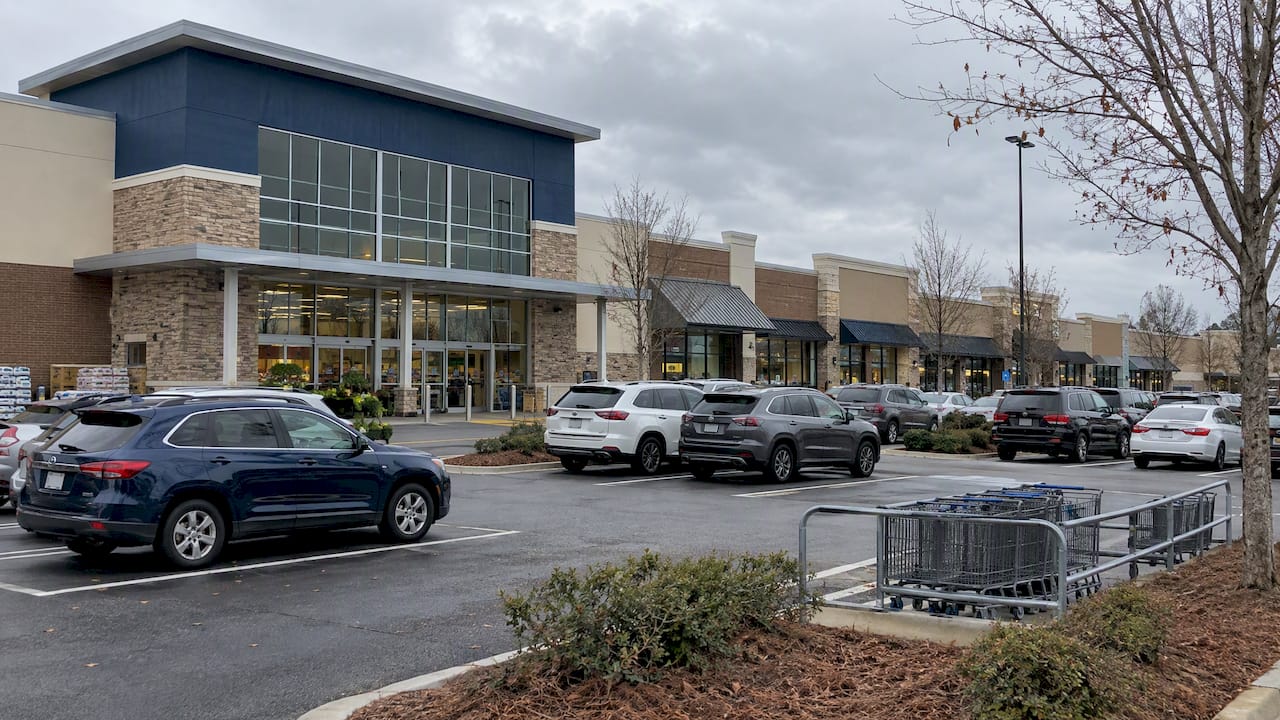
Retail activity in Charlotte has been significantly driven by big-box, single-tenant move-ins from supermarkets such as Publix, Harris Teeter and Lowes Foods, along with soft-goods discounters such as T.J. Maxx, Marshalls and Burlington. These tenants sign long leases, drive daily traffic and pull in smaller shop tenants such as dentists, salons, restaurants and urgent care.

Grocery-anchored centers in suburban submarkets like Ballantyne, University City and Lake Norman have sustained positive absorption through early 2026, with the major chains also making new development feasible.
A corporate and financial services economy
Charlotte’s retail strength leans on what one investment firm calls a financial services and corporate headquarters demand thesis. That supports high-end corridors like SouthPark, while necessity retail carries the suburbs. A Marcus & Millichap senior managing director described the “almost unlimited appetite” for well-located retail in Charlotte as pushing pricing up.
Limited new supply
New power-center development in Charlotte remains muted as of early 2026, while neighborhood retail tied to new residential nodes grows selectively. The same briefing notes that local contractors are chasing renovation and tenant-improvement work. Less new space coming online keeps existing space tight, and it makes renovated older buildings more valuable.
Why the average hides the real story
A metro-wide number blends very different properties. Here is how the same market looks from three seats.
| Property type | What tends to happen | What to check |
|---|---|---|
| Grocery-anchored suburban center | Steady absorption, strong shop-space demand | Anchor lease term, co-tenancy clauses, sales per square foot |
| Older power center or big-box row | Slower leasing, more redevelopment talk | Box size, subdivision potential, remaining term |
| Unanchored neighborhood strip | Depends on the corridor and the tenant mix | Rent roll, local traffic, parking, tenant credit |
| Single-tenant net lease | Priced on lease term and tenant credit | Remaining term, guarantee, renewal options |
This table describes tendencies, not measured vacancy by category. For exact submarket figures, use a current report for the specific category. Our Charlotte submarkets guide walks through where buyers, sellers and borrowers are focusing.
Retail closures also shape individual centers. When a national chain shuts stores, the effect on a given landlord depends on how much space the chain held and how easily the box can be re-leased. We covered this in what big-box closures mean for retail investors.
What low vacancy means if you are a tenant
When space is scarce, landlords hold more leverage. A tenant who starts looking 60 days before a lease ends is negotiating from a weak position. Here is how to protect yourself.
- Start early. Build time into your plan for site selection, a letter of intent, lease drafting and buildout. Our leasing timeline for medical and office tenants shows how long each step takes.
- Pick the site with data. Traffic counts, demographics and co-tenancy matter more than the lowest rent. See our retail site selection playbook.
- Negotiate the first lease carefully. Tenant improvement allowances, CAM caps and exclusives are set in the letter of intent, not after. Read our guide to first retail lease negotiation in Charlotte.
- Understand the cost structure. In a triple net lease you pay your share of taxes, insurance and maintenance on top of base rent. Our explainer on the triple net lease shows what to ask for before you sign.
- Limit personal exposure. If a landlord asks for a guarantee, see how to negotiate a corporate guarantee and cap it at 12 months’ rent.
- Watch the back end. Holdover provisions can be costly. Know what holdover rent clauses can trigger before you need to stay past expiration.
Medical and dental tenants should also review the buildout terms. A landlord work letter checklist helps confirm who pays for plumbing, electrical and specialty improvements.
What low vacancy means if you own or invest
Tight markets reward owners who manage the details. Higher occupancy helps, but a building’s value rests on its lease terms, expense recoveries and tenant credit.
- Know your real vacancy. Compare physical and economic vacancy. A center that is 95% occupied but giving free rent may not be performing like one that is 95% occupied at full rent.
- Audit CAM and reimbursements. Errors in expense pass-throughs create disputes and lost income. A CAM reconciliation review can find them.
- Verify tenants before you buy or sell. An estoppel certificate confirms what the tenant says the lease terms are.
- Underwrite the downside. A DCF built on realistic downtime, leasing costs and re-tenanting scenarios tells you more than the current occupancy does. Our commercial property valuation work does this.
- Plan the exit. If you plan to sell and reinvest, read the 1031 exchange timeline and the 1031 exchange rules early, because the deadlines are fixed.
- Budget operations. A realistic property management budget keeps net operating income honest.
Investors comparing asset classes can also look at how tight retail compares with our Charlotte office market analysis and our look at Charlotte industrial vacancy.
Our perspective
Vacancy statistics are a starting point, not a verdict. We read the metro number, then go straight to the property: who the anchor is, how long the leases run, what the tenants pay in CAM, and what a realistic re-leasing scenario costs.
In a tight market like Charlotte, the owners who do best are the ones who know their rent roll and lease language cold. The tenants who do best start early and negotiate the letter of intent, not the final draft. That is why we work on both sides of the table, as landlord and tenant representatives, and why we build custom market reporting around a client’s actual submarket instead of handing over a generic chart.
If you are weighing a sale, a purchase or a renewal, ask for the numbers on your specific property first. The metro average will not close your deal.
Jim
Get the numbers for your property
We advise owners, investors and tenants across the Charlotte area on sales, leasing, landlord and tenant representation, lease review, valuation and property management. If you need to know where your center, building or search stands, our team can help. Tenants preparing for a search can start with tenant representation, and owners can request a property valuation with DCF modeling.
Bring your lease, rent roll or target submarket, and we will show you how the market data applies to it.
FAQ
What is the retail vacancy rate in Charlotte?
One 2026 market overview reported 4.2%. Other reports differ because they define the inventory and “vacant” space differently. Check the current quarter’s report for your property type and submarket before you rely on any figure.
Is a low vacancy rate good for a retail landlord?
Generally it supports rent growth and stronger lease terms. The benefit depends on your own building, though. A property with short leases, weak tenants or poor access may still struggle in a tight market, so review your rent roll and expense recoveries.
Which Charlotte retail areas are strongest?
Grocery-anchored centers in suburban areas such as Ballantyne, University City and Lake Norman have sustained positive absorption, and SouthPark remains a trophy retail corridor. Performance still varies center by center.
How does vacancy affect a tenant’s lease negotiation?
The fewer good spaces available, the more leverage the landlord has. Tenants should begin the search well before expiration and negotiate TI, CAM caps, exclusives and guarantees in the letter of intent.
Sources
- Retail Investing in Charlotte: A Complete Guide
- Charlotte, Raleigh Named No. 1 and No. 2 Retail Markets (Bisnow)
- Southeast Retail Market Report, Q1 2026
- Charlotte Construction Market 2026 Executive Briefing (ABC Carolinas)
- Vacancy Rate (RETS.ai glossary)