
Midtown, South End, and SouthPark lead Charlotte’s office and medical office recovery in 2026, while the Airport/West and I-85 logistics corridors carry the strongest industrial fundamentals. The one rule that matters most this cycle: underwrite submarket-level absorption and construction pipeline before trusting a headline vacancy number, because county-level results vary enormously. Industrial vacancy varied across Charlotte’s corridors, and financing decisions around CMBS sell versus refinance and DSCR sizing hinge on a submarket-level view.
TL;DR:
- Industrial construction reached approximately 6.1 million square feet in Q2 2026, concentrated in Airport/West, Cabarrus, Union, and North submarkets; compare deliveries with Class A absorption.
- Model infill multifamily leasing from local absorption, but allow suburban Class A properties longer lease periods and budget for concessions during the first two years.
- For CMBS maturities, refinance when cash flow is stable or improving and DSCR clears lender minimums; consider selling if income falls or maturity nears.
- Medical practices should compare buying and leasing in a DSCR model that weighs tax treatment, equity growth, buildout control, and funds for staffing or equipment.
Table of Contents
- A quick map of Charlotte’s strongest and weakest submarkets
- Office and medical office: where fundamentals favor buyers and tenants
- Industrial corridors: where to build conviction and where to slow down
- Multifamily: patient capital wins in a normalizing supply cycle
- CMBS sell or refinance, and how DSCR sizing works in 2026
- How to screen a Charlotte submarket before you commit capital
- Turning this guide into your next move
- Retail submarkets: where foot traffic and rooftops still drive demand
- Land sales: where opportunity concentrates and what to watch
- Valuation nuances that shift by submarket
- Why lease review and abstraction matter before you close
- CAM reconciliation across Charlotte’s commercial property types
- Return expectations and risk by submarket and asset class
- What we’re watching most closely this cycle
- How we help you act on this guide
- FAQ
- Sources
A quick map of Charlotte’s strongest and weakest submarkets
Charlotte’s commercial landscape splits cleanly into a handful of lanes, each suited to a different investor profile. Here’s how we see the major nodes shaping up heading into the back half of 2026.
Uptown, South End, and Midtown attract job activity and foot traffic, factors that can support rents as the broader office market changes. These submarkets suit value-add buyers willing to reposition older stock and core investors seeking stabilized assets with dependable tenant demand. South End in particular benefits from a dense mix of office, multifamily, and retail that keeps daytime population high and vacancy comparatively tight.
SouthPark and Ballantyne offer a different flavor: premium office towers and high-end retail nodes anchored by affluent trade areas. These submarkets fit investors who want stabilized income over ground-floor appreciation, since rents here already reflect a mature, well-leased market rather than a turnaround story.
The Airport/West corridor and nearby counties are important areas to assess for industrial investment. Class A bulk distribution product is absorbing well, and investors chasing logistics exposure should start here rather than in secondary industrial pockets.
University City and several outer suburban corridors carry more risk. New supply has outpaced leasing in spots, so absorption timelines run longer and underwriting needs to assume slower stabilization rather than market-average speed.
North Carolina’s Catawba, Gaston, and Rowan counties show the most uneven industrial performance. Vacancy swings here are sharper than the metro average, and a single large vacancy or lease-up can skew a county’s headline number for a full reporting period.
Before committing capital to any submarket, check these factors:
- Vacancy trend: is it improving or worsening over recent quarters, not just in the current snapshot
- Under-construction pipeline: how much new supply is set to deliver into the same submarket in the coming period
- Recent absorption: whether net absorption has been positive and whether it is concentrated in Class A or spread across the quality spectrum
Investors who run this three-point check before touring a single property save themselves from the most common Charlotte mistake: buying into a submarket because the metro-level numbers look good while the specific corridor is quietly oversupplied. For a deeper look at how leasing and sales activity break down by office node, our Charlotte office market analysis walks through the leasing and sales trends shaping these submarkets in more detail.
Office and medical office: where fundamentals favor buyers and tenants
Charlotte’s office market is not one market, it’s several, and the divide matters more in 2026 than it has in years. Midtown, South End, and SouthPark may offer opportunities for tenants and owners, but current vacancy and absorption conditions should be verified for each submarket. University City and pockets of the Airport corridor sit on the opposite end, with vacancy elevated enough that any acquisition there needs a clear repositioning thesis rather than a bet on organic lease-up.
Medical office stands apart from general office because its demand drivers are structural rather than cyclical. Proximity to major hospital systems, the growth of life-science and medical education nodes like The Pearl, and ongoing clinic consolidation all push demand for well-located medical space even when general office struggles. We cover specific transaction examples and lease structures in our medical office demand coverage, including recent sale activity and 1031 exchange considerations relevant to practitioners exiting or upgrading their real estate.
For medical professionals, the lease versus buy decision comes down to several factors:
- Balance sheet: buying ties up capital that could otherwise fund equipment or staffing, while leasing preserves liquidity for practice growth
- Control: ownership allows buildout customization and long-term space planning that many landlords restrict under a standard lease
- Time horizon: a practice planning to stay in one location for an extended period may find ownership more attractive than leasing, depending on costs and its circumstances.
Pro Tip: Before signing a lease or closing on a building, compare both scenarios in a DSCR model and account for tax treatment, equity buildup, and the practice’s broader financial needs.
For owners who already hold office or medical office real estate, CMBS refinance decisions in 2026 depend heavily on which submarket the asset sits in. A SouthPark medical building with improving occupancy may be a stronger refinance candidate, while an Airport-area office asset with rising vacancy may warrant considering a sale. Our DSCR loan sizing guide breaks down how lenders stress-test these deals.
Industrial corridors: where to build conviction and where to slow down
Industrial remains Charlotte’s most construction-heavy asset class, and the pipeline is not evenly distributed. New construction concentrates in Airport/West, Cabarrus, Union, and the North submarkets, where developers continue to chase logistics demand tied to the region’s highway network and population growth.
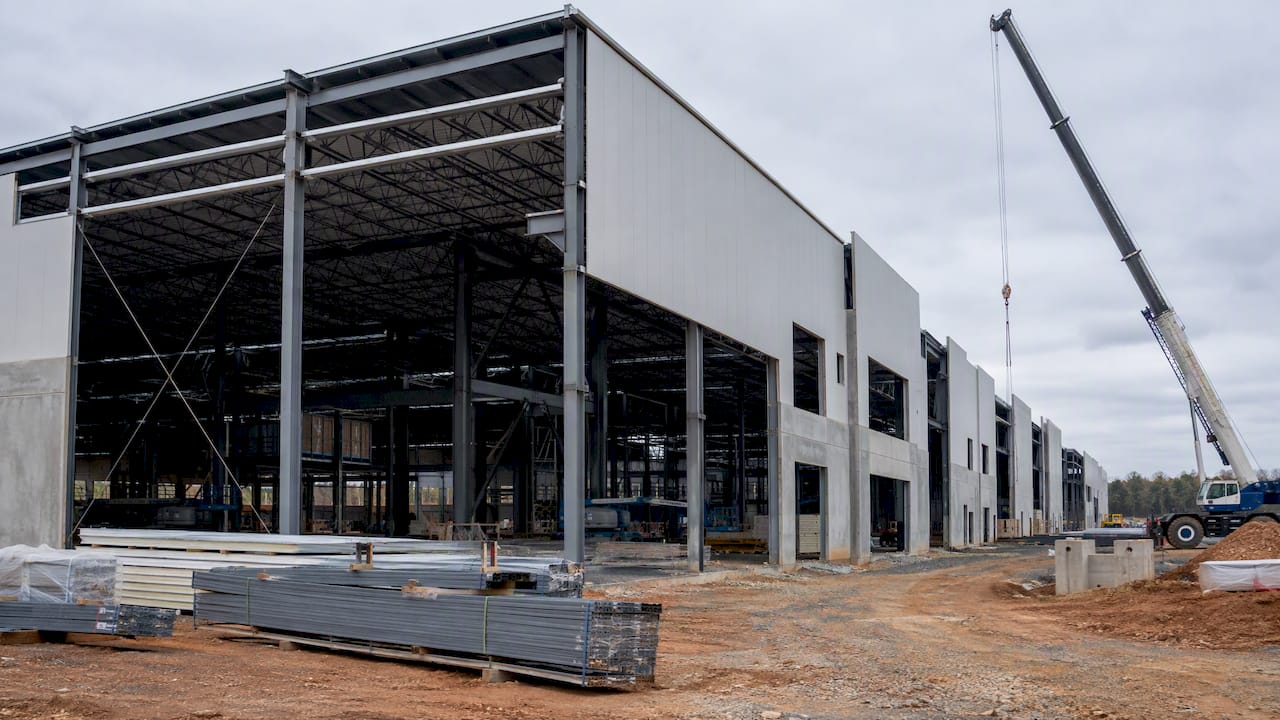
The active industrial construction pipeline stood at approximately 6.1 million square feet in Q2 2026, a significant volume that will test absorption capacity in the corridors where it’s concentrated. That pipeline sits alongside an industrial market whose vacancy conditions vary by corridor, so investors should assess local supply and demand rather than infer a metro-wide trend.
The counties to watch carefully are Rowan, Gaston, and Lincoln, where headline vacancy numbers swing more than the metro average and lease-up sensitivity is higher. A large tenant move-out or move-in can have a notable effect on vacancy in smaller markets, making broad market vacancy a poor underwriting anchor there.
When evaluating an industrial deal, prioritize:
- Class A absorption specifically, not blended absorption across all building classes, since older product in volatile corridors struggles against new deliveries
- Tenant credit quality, especially in single-tenant net lease deals where the building’s value is tied closely to one company’s staying power
- Delivery timing, comparing when competing new supply hits the market against your lease expiration or stabilization schedule
Investors can make more informed entry decisions by considering Class A performance alongside headline county vacancy. For context on how land availability feeds this pipeline, our Charlotte land development guide covers the sites feeding tomorrow’s industrial deliveries.
Multifamily: patient capital wins in a normalizing supply cycle
Charlotte’s multifamily market delivered a wave of new units over the past two years, and 2026 is the year that supply works through the system. The pattern is uneven: infill submarkets are recovering faster than suburban ones, and investors who assume a uniform recovery timeline will misprice risk.
Q2 2026 market data describes differing vacancy trends across Charlotte submarkets, including infill locations where renters may value walkability and proximity to jobs. Suburban Class A properties, by contrast, often still need meaningful concession packages to fill units competing against newer deliveries in the same corridor.
That split changes how investors should model a multifamily acquisition depending on location:
- Infill properties (Uptown, South End, Myers Park) should be underwritten using location-specific lease-up assumptions based on observed absorption
- Suburban Class A should be modeled with longer absorption periods and realistic concession allowances baked into year-one and year-two pro formas
- Value-add suburban assets need a stress test on whether planned rent increases are achievable given nearby new supply still working through lease-up
The practical takeaway: don’t apply a South End absorption curve to a Ballantyne-area suburban deal. Pull the specific submarket’s recent delivery and concession data before finalizing a purchase price, and build in a cushion for slower stabilization in the corridors still digesting new units.
CMBS sell or refinance, and how DSCR sizing works in 2026
Every owner with a CMBS loan approaching maturity in 2026 faces the same question: sell or refinance. The answer depends less on personal preference and more on where the asset’s cashflow trend and loan metrics stand today.
Refinancing tends to make sense when cashflow has stabilized or is improving, when the debt service coverage ratio comfortably clears the lender’s minimum threshold, and when there’s genuine lender appetite for the asset class and submarket. An office building in South End with climbing occupancy is a much easier refinance conversation than one in a submarket still absorbing new supply.
Selling becomes the more sensible path when cashflow has been declining for several quarters, when loan maturity is approaching faster than the property can improve its numbers, or when DSCR has slipped close to or below what a new lender would require. Rather than risk a maturity default or accept unfavorable refinance terms, consider whether a sale while the asset has a defensible income story may preserve value.
DSCR sizing can vary as lenders stress-test cashflows against interest-rate assumptions and submarket-specific vacancy risk. A lender underwriting a medical office deal in a strong corridor will apply a different vacancy assumption than one underwriting a general office asset in a softer submarket, even at the same headline interest rate.
Capital sources vary by asset class:
- Bank permanent financing remains most available for stabilized, well-located office and medical office assets with strong tenant rosters
- Agency lending fits multifamily deals, particularly in submarkets showing the faster absorption we outlined above
- Bridge and private lenders fill gaps for value-add deals, transitional industrial assets, or borrowers needing speed and flexibility that traditional lenders can’t match
Pro Tip: Before approaching a lender for a refinance, run your own DSCR stress test using a vacancy assumption 2 to 3 points higher than your current occupancy, since that’s roughly the cushion most lenders will apply. For a full breakdown of how lenders size these loans, see our DSCR loan sizing guide. Investors exploring private or bridge financing alongside traditional bank options may also find value in resources like Mayday’s commercial property document checklist, which covers the documentation DSCR and bridge lenders typically require.
How to screen a Charlotte submarket before you commit capital
Running a disciplined screening process before touring properties saves time and avoids costly mistakes. Follow this order:
- Confirm job-node proximity: identify which major employers or hospital systems anchor demand in the submarket and whether that base is growing
- Pull the supply pipeline: check how much new product is under construction or permitted within the same submarket
- Check the vacancy trend: review recent quarters, not just the current rate, to assess direction rather than relying on a single data point
- Establish the rent basis: compare asking rents to effective rents after concessions to understand true market pricing
- Review tenant credit and lease term structure: for income-producing assets, weigh the quality and duration of existing leases
- Factor in local infrastructure plans: transit and road investments may affect submarket economics over the long term
When speaking with brokers or sellers, ask directly about recent concessions offered on comparable space, the building’s lease expiration schedule, and the terms of the most recent comparable trades in the submarket. Weight these criteria differently depending on your strategy: value-add investors should weight supply pipeline and rent basis most heavily, core-stabilized buyers should weight tenant credit and lease term, and industrial logistics investors should weight job-node proximity and infrastructure access above all else.
Turning this guide into your next move
Three concrete steps turn this research into action. First, start sourcing: connect with local brokers who track submarket-level comps, request both on-market and off-market lists for your target corridor, and subscribe to quarterly market report feeds so you’re not working from stale data.
Second, line up the right advisory support at the right stage:
- Tenant or landlord representation when you’re negotiating a lease rather than a purchase
- Valuation and DCF modeling before making an offer, to confirm the asking price reflects submarket reality
- Lease abstraction for any acquisition with existing tenants, so you understand exactly what you’re buying
- Property management once you close, to protect the income stream you underwrote
Third, build a starter underwriting package: a snapshot profit and loss statement, a three-scenario DSCR model covering base, downside, and upside cases, and a cap-rate sensitivity test showing how a 25 to 50 basis point shift changes your return.
Retail submarkets: where foot traffic and rooftops still drive demand
Charlotte’s retail submarkets track population growth closely, which means the suburban corridors absorbing new rooftops also tend to absorb new retail space fastest. South End and Uptown attract a different retail profile: smaller-format, experience-driven tenants that benefit from dense daytime population rather than drive-by traffic. SouthPark and Ballantyne remain the metro’s premium retail nodes, anchored by established trade areas with strong household incomes.
Investors evaluating retail should separate necessity-based retail, such as grocery-anchored centers, from discretionary retail tied to disposable income. Necessity-based centers in growing suburban corridors like Cabarrus and Union counties tend to hold occupancy well because they serve rooftops that keep expanding. Discretionary retail performs best in established, high-traffic nodes like SouthPark where consumer spending power is already proven.
A practical note for site selection: Charlotte’s retail success increasingly depends on co-location with multifamily and office density rather than standalone highway visibility. Our retail site selection playbook walks through the data points worth checking before committing to a retail acquisition or lease in any of these corridors.
Land sales: where opportunity concentrates and what to watch
Land sales activity in Charlotte follows corridors driving industrial and multifamily construction, including Cabarrus, Union, Iredell, and Airport/West, where developers pursue sites for logistics and residential projects. Pricing on raw and entitled land varies significantly depending on utility access, zoning status, and proximity to planned infrastructure.
Entitled, shovel-ready sites command a premium over raw land because they remove permitting timeline risk, a meaningful factor given how construction costs and interest rates have moved over the past few years. Investors considering a land purchase should weigh entitlement status heavily against purchase price, since a cheaper raw parcel can end up costing more once holding costs through a multi-year entitlement process are factored in.
County-level zoning and infrastructure capacity also shape opportunity. Counties investing in road and utility extensions ahead of demand, often tied to the broader regional transportation program, tend to see land values appreciate faster than those waiting on development to justify infrastructure spending. Our Charlotte land development guide covers specific considerations for evaluating raw versus entitled parcels across these submarkets in more depth.
Valuation nuances that shift by submarket
Commercial property valuation in Charlotte can’t rely on a single metro-wide cap rate. SouthPark office assets trade at tighter cap rates than comparable buildings in University City, reflecting the income stability difference between a mature, well-leased submarket and one still working through elevated vacancy. Industrial valuations show a similar split: Class A bulk distribution in the Airport/West corridor commands pricing that older, secondary industrial product in Rowan or Gaston counties simply can’t match.
Medical office valuation may depend on tenant practice stability and lease terms as well as market comparables, especially for single-tenant or owner-occupied buildings. A DCF approach that models tenant renewal probability and buildout reinvestment needs typically produces a more defensible number than a straight cap-rate shortcut for this asset type.
Getting a submarket-specific valuation right matters most at two moments: when deciding whether to sell versus refinance a CMBS-encumbered asset, and when negotiating a purchase price on an acquisition. Our commercial property valuation and DCF modeling work focuses on pulling the right comparables for the specific submarket rather than leaning on metro averages that can mask real pricing differences between corridors.
Why lease review and abstraction matter before you close
Every acquisition with existing tenants carries risk hidden inside the lease language itself, not just the rent roll summary a seller provides. Lease abstraction pulls out the terms that actually drive value: renewal options, expansion rights, exclusivity clauses, and termination triggers that a quick rent roll review often misses entirely.
This matters most in multi-tenant office and medical buildings, where a handful of leases with different terms, escalation structures, and renewal windows can make or break an underwriting model. Buying a building with several tenants approaching lease expiration around the same time carries different risk than one with staggered expirations, even if the current rent roll looks identical.
A thorough lease review also surfaces landlord obligations that affect net operating income, such as capital improvement commitments or tenant improvement allowances still owed. Skipping this step and relying on a seller’s summary is one of the more common ways investors overpay for Charlotte office and medical office acquisitions. Our lease abstraction guide covers the specific terms worth flagging before you finalize an offer.
CAM reconciliation across Charlotte’s commercial property types
Common area maintenance reconciliation affects net income differently depending on property type, and getting it wrong distorts the return an investor thinks they’re buying. In office and medical buildings, CAM charges often cover a mix of shared services, from landscaping to shared parking lot maintenance, and the accuracy of past reconciliations tells you whether the operating expense history you’re underwriting from is reliable.
Retail properties carry the highest CAM complexity, since multi-tenant centers often have different CAM caps, exclusions, and pass-through structures negotiated tenant by tenant. A center with inconsistent CAM reconciliation history can mean the seller’s stated net operating income doesn’t match what a new owner will actually collect.
Industrial properties typically have simpler CAM structures, often single-tenant net leases, but reconciliation accuracy still matters for multi-tenant industrial parks where shared truck courts or common loading areas create joint expense pools. Before closing on any multi-tenant asset, request historical CAM reconciliation statements rather than relying on the current estimate alone. Our CAM reconciliation analysis work focuses on catching these discrepancies before they become a post-closing dispute.
Return expectations and risk by submarket and asset class
Return expectations in Charlotte vary meaningfully by both submarket and asset class, and conflating the two leads to mismatched risk and reward assumptions. Stabilized office and medical office assets in SouthPark or Midtown typically offer lower but more dependable income returns, appropriate for investors prioritizing cashflow certainty over upside.
Value-add office in submarkets still working through elevated vacancy, like pockets of University City, can offer higher return potential but requires a credible repositioning plan and tolerance for a longer hold period before stabilization.
Industrial Class A in the Airport/West corridor sits in between: strong fundamentals support dependable income, but pricing reflects that strength, so outsized returns usually come from development or value-add plays rather than stabilized acquisitions. Multifamily returns split along the same infill versus suburban line discussed earlier, with suburban Class A offering higher potential yield to compensate for the longer absorption and concession risk during lease-up.
Matching the right asset class and submarket combination to your own risk tolerance and hold period, rather than chasing whichever deal looks cheapest on paper, is the single best predictor of whether a Charlotte acquisition performs the way it was underwritten.
What we’re watching most closely this cycle
Medical office and industrial transactions deserve the sharpest focus this cycle, not because other asset classes lack opportunity, but because both carry structural demand drivers that hold up regardless of where the broader office market lands. We prioritize submarket-level research over metro averages for exactly this reason: a Cabarrus County industrial deal and a Rowan County industrial deal can look identical on paper and perform very differently. Local advisory work means tracking those differences deal by deal, not relying on a single quarterly headline number.
— Jim
How we help you act on this guide
We work with Charlotte owners and investors across sales, leasing, and advisory services, including medical office transactions, tenant and landlord representation, property valuation, and DSCR loan structuring guidance for CMBS sell-versus-refinance decisions. Whether you’re buying your first medical building, selling an industrial asset, or sizing a refinance, our team pulls the submarket-specific data to back the decision.
If you’re ready to act on a specific submarket or asset, request a Charlotte market briefing through our services page and we’ll walk through the numbers with you directly.
FAQ
What areas should investors watch carefully in Charlotte?
Pockets of University City and several outer suburban corridors carry more supply-driven risk due to new deliveries outpacing current leasing. County-level industrial markets like Rowan and Gaston also show sharper vacancy swings than the metro average, so underwriting there should lean on Class A absorption data rather than headline county vacancy.
What are the predictions for the Charlotte housing market in 2026?
Multifamily supply is normalizing in 2026, with infill submarkets like Uptown, South End, and Myers Park showing faster vacancy declines than suburban corridors still absorbing recent deliveries. Suburban Class A properties are likely to keep offering concessions until that supply wave fully works through the system.
What is the wealthiest neighborhood in Charlotte?
SouthPark and Ballantyne are widely recognized as among Charlotte’s more affluent commercial and residential corridors, supporting premium office and retail pricing in those submarkets. These areas tend to attract investors seeking stabilized income rather than value-add upside, given how mature the leasing market already is there.
What salary is needed to live comfortably in Charlotte?
No single salary figure applies universally, since housing and living costs vary significantly across Charlotte’s submarkets and household circumstances. Income-driven demand across the Charlotte MSA is tracked through BLS labor market data, which offers a useful starting point for understanding local wage trends relevant to housing affordability.
How do I decide whether to buy or lease medical office space?
The decision comes down to balance sheet priorities, how much control you need over buildout and long-term space planning, and how long you expect to operate from the same location. Practices planning to stay in one location for an extended period may find ownership more attractive, while those prioritizing liquidity for growth may favor leasing.