
A typical commercial lease takes roughly three to six months from a signed letter of intent to rent commencement, though a heavy buildout can push that past a year. The three variables that move the estimate most are the scope of tenant improvements, how many rounds of legal redlines the lease goes through, and the property type itself. Medical and office tenants should start planning well before they expect to need space, since licensing and specialized buildouts often require extended time.
TL;DR:
- Negotiations from LOI to lease signing typically take three to eight weeks, but pre-approving lease language can significantly reduce this timeframe.
- Key contractual dates include the Effective Date, the Commencement Date, and the Rent Commencement Date, which can be separated by weeks or months depending on free rent or buildout periods.
- The landlord’s legal review of tenant redlines and permit delays are common factors causing lease timeline delays, which can be mitigated by early approvals and permits.
- Starting site searches at least 12 to 18 months in advance for medical practices helps ensure sufficient time for licensing and specialized buildouts, strengthening negotiating leverage.
Table of Contents
- The phase-by-phase leasing timeline
- How lease term and property type change your timeline
- The dates that actually control your move-in
- Where deals stall and how to keep yours moving
- Get organized before you send the first LOI
- An advisor’s view on medical and office timing
- How a commercial real estate broker keeps your timeline on track
- Resources to keep your timeline realistic
- Sources
- FAQ
The phase-by-phase leasing timeline
Every commercial lease moves through the same six phases, whether the space is a 1,200 square foot suite or a distribution center. Knowing what happens in each phase, and who owns it, keeps a deal from stalling.
- Market search and selection: The tenant and broker tour available spaces, compare rent and TI offers, and narrow to a shortlist. This phase runs anywhere from a few weeks to a few months depending on how specific the site requirements are.
- Letter of intent (LOI): The Letter of Intent is where landlord and tenant align on rent, term, TI allowance, and free rent before anyone drafts a full lease. It is not a binding contract, but a strong LOI prevents the lease draft from reopening basic business terms later. Expect one to three weeks to negotiate.
- Due diligence and approvals: While the lease is being drafted, the tenant should run zoning checks, confirm licensing requirements, and request estoppel certificates if there is an existing tenant history to verify. These tasks run in parallel with drafting and typically take two to four weeks.
- Lease drafting and legal negotiation: This is usually the longest single stage. Landlord counsel drafts the lease from the LOI terms, tenant counsel redlines it, and the back and forth can run three to eight weeks depending on how many issues surface.
- Tenant improvements and permits: Design, permitting, and construction happen once the lease is signed or, in some cases, once the work letter is agreed. This phase ranges from six weeks for a light cosmetic refresh to six months or more for a medical suite with specialized systems.
- Delivery, punchlist, and rent commencement: The landlord delivers the space, the tenant walks the punchlist, and rent commencement often lags physical delivery by a few weeks to allow move-in and final inspections.
How lease term and property type change your timeline
Lease term length and property type drive most of the variation in how long a deal takes to close and build out. Longer terms generally justify bigger tenant improvement packages, which stretches the construction phase even as it improves the tenant’s negotiating position on allowance dollars.
- Office: Terms typically run three to seven years, with TI complexity varying widely by how much of the space needs reconfiguring.
- Medical office: Plan on 12 to 18 months lead time. Licensing, equipment infrastructure, and specialized buildouts add stages a standard office lease never sees.
- Industrial: Terms often run five to fifteen years, long enough to justify racking, dock, or production infrastructure that takes months to install.
- Retail and restaurant: Retail terms commonly run five to ten years, while restaurant leases often extend to ten to fifteen years or longer to justify hood, ventilation, and grease trap installations that require extra permitting time.
Longer terms buy more TI dollars, but they also mean more time spent negotiating what happens if the tenant leaves early.
The dates that actually control your move-in
Three contractual dates decide when a tenant actually starts paying rent, and confusing them causes real cash-flow surprises. The Effective Date is when the lease is signed. The Commencement Date is when the space is delivered or occupied. The Rent Commencement Date is when rent payments actually begin, and it can land weeks or months after Commencement Date to account for free rent or a landlord buildout period.
- The work letter spells out who builds what, on what schedule, and who pays.
- Free-rent windows typically align with the tenant improvement period so the tenant is not paying rent while contractors are still on site.
- Milestone dates for landlord delivery should carry a remedy, such as rent abatement, if construction delays block tenant access.
Fixing these dates in the lease, rather than leaving them open ended, is the single easiest way to avoid a dispute six months into the buildout.
Where deals stall and how to keep yours moving
Landlord legal review of tenant redlines is often the biggest single bottleneck in a leasing timeline. Tenants can cut this stage down by having their broker pre-approve standard lease language before the LOI is even signed, so the lease draft arrives with fewer open issues.
The work letter deserves the same attention as the lease itself. It should name approved vendors, set milestone-based drawdowns for TI dollars, and specify inspection triggers so no one is guessing when a phase is actually complete.
- Pre-approve vendors before construction bids go out, not after.
- Stagger design and procurement so long-lead items like HVAC equipment are ordered while permits are still in review, a sequencing tactic detailed in this HVAC and plumbing coordination guide.
- Pull permits early, even before the lease is fully executed if the landlord allows it.
Pro Tip: For medical and office renewals, run an NPV comparison of renewing versus relocating at least 120 days before lease expiration, which is often enough runway to negotiate from a position of leverage rather than urgency.
Get organized before you send the first LOI
Wasted cycles almost always trace back to a tenant or landlord who wasn’t ready to move once negotiations started. Assembling the right documents early keeps the timeline from stalling on paperwork instead of substance.
- Financial documents: Pull financial statements, proof of insurance, and any prior estoppel certificates tied to the space.
- Design and budget basics: Sketch a high-level space program, set a target TI allowance, and get informal input from a general contractor before you negotiate.
- Financing coordination: If a lender or investor is involved, line up DSCR figures and, for a 1031 exchange, confirm the identification and closing windows ahead of time.
- Engagement order: Bring in a broker first, then an architect, then legal counsel, then the general contractor, in that sequence.
An advisor’s view on medical and office timing
Medical and office tenants who wait until three or four months before their current lease expires almost always end up negotiating from a weaker position. Licensing delays and specialized buildouts do not compress just because a deadline is close.
We push clients toward earlier starts and use an NPV comparison at the 120 day mark before lease expiration to decide, with real numbers, whether renewing or relocating protects the rent roll better. That single calculation has kept more than one client out of a forced, unplanned vacancy.
— Jim
How a commercial real estate broker keeps your timeline on track
The best time to bring in a broker is before you send an LOI, not after negotiations stall. Experienced commercial brokers can help tenants and landlords keep leasing timelines realistic from the first site tour through rent commencement.
Our team handles the pieces that most often cause delay:
- Tenant and landlord representation through the full negotiation cycle.
- Lease review and CAM reconciliation to catch cost issues before they slow signing.
- DCF modeling to support NPV-based renewal decisions for medical and office tenants.
Visit our services page to see how we can help structure your next lease around a timeline that actually works.
Resources to keep your timeline realistic
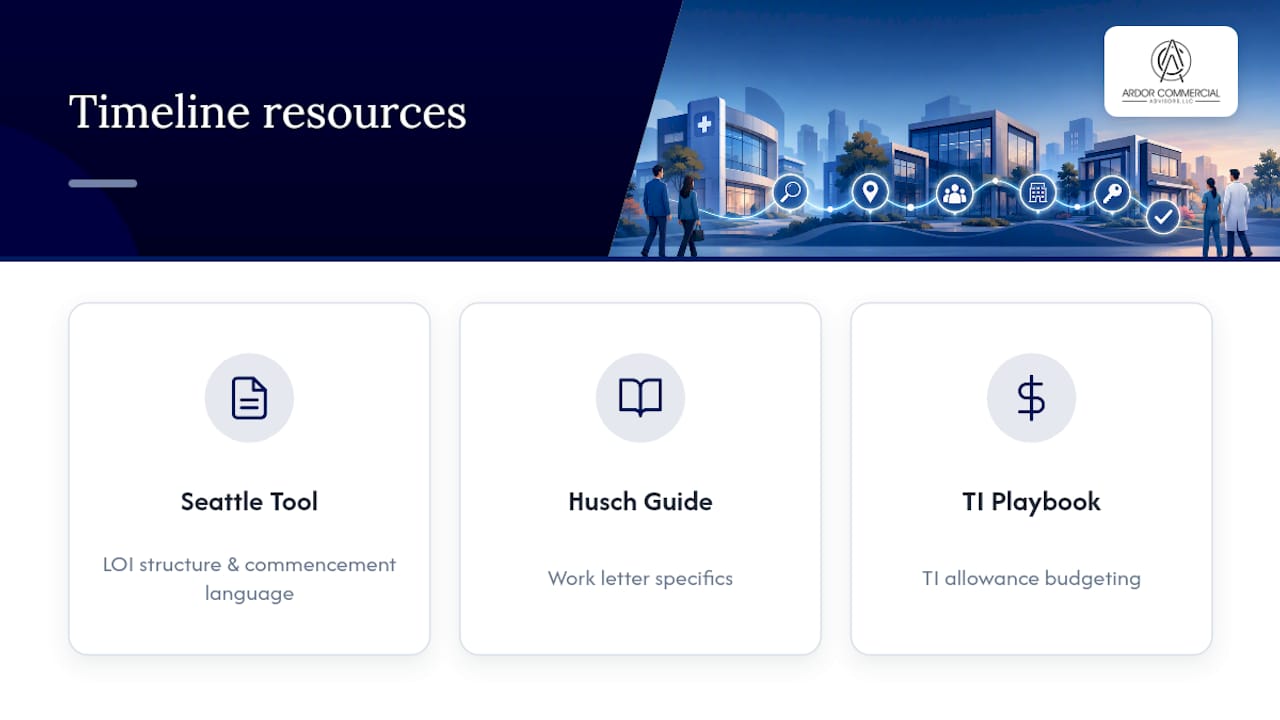
For a closer look at LOI structure and commencement date language, the Seattle commercial lease tool walks through both. For work letter specifics, see the Husch Blackwell tenant guide. Our tenant improvement allowance playbook covers TI budgeting in more detail.
Sources
FAQ
How long does it take to negotiate a commercial lease?
Negotiating the lease itself, from LOI to signed lease, typically takes three to eight weeks depending on how many rounds of redlines are needed. Pre-approving standard lease language before the LOI stage can shorten this considerably.
What is the difference between Commencement Date and Rent Commencement Date?
The Commencement Date is when the tenant takes possession of the space, while the Rent Commencement Date is when rent payments actually start. The gap between them usually covers a free-rent or buildout period.
Is a letter of intent legally binding?
A letter of intent is generally not a binding lease. It is a tool for aligning on major business terms like rent, term, and TI allowance before the full lease gets drafted.
How early should a medical practice start its lease search?
Medical practices should start 12 to 18 months before their target move-in date because licensing and specialized buildouts take longer than a standard office fit-out. Waiting until a few months before lease expiration limits negotiating leverage.
What causes the most delays in a commercial lease timeline?
Landlord legal review of tenant redlines is one of the most common bottlenecks, along with permitting delays during the tenant improvement phase. Pre-approved lease forms and early permit filing help compress both.